
.svg)





All About The Curves.
Before brands started shaping cases to follow the wrist, Movado figured out the harder part first—how to make the movement follow the case.
This is the Polyplan, introduced in 1912, and it’s one of those ideas that sounds simple until you realize how complicated it is to execute. A curved watch isn’t difficult on its own. You can always drop a small round movement inside and call it a day. But that comes with compromise—smaller balance, smaller mainspring, less stability.
Movado went in the opposite direction.
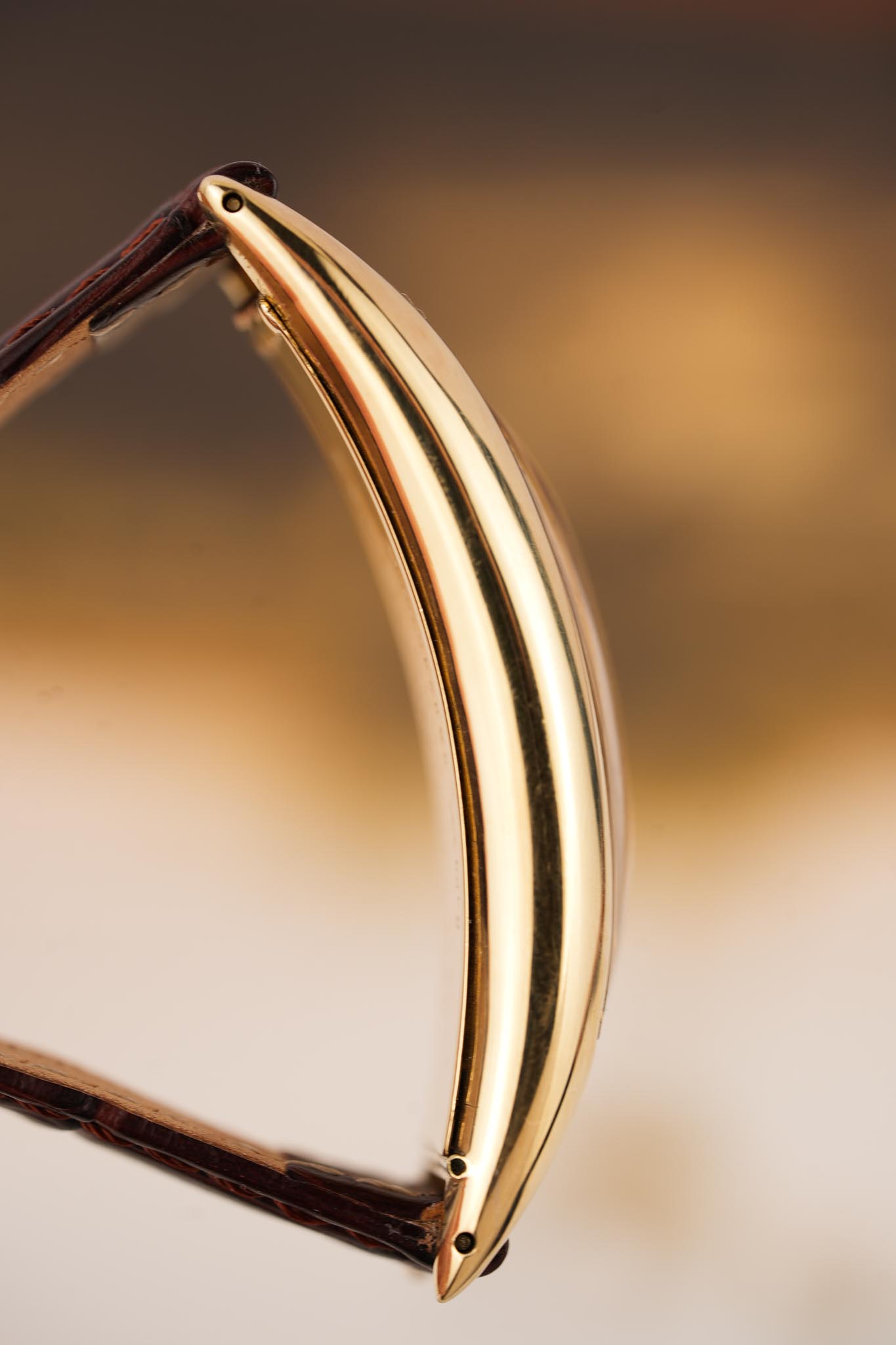
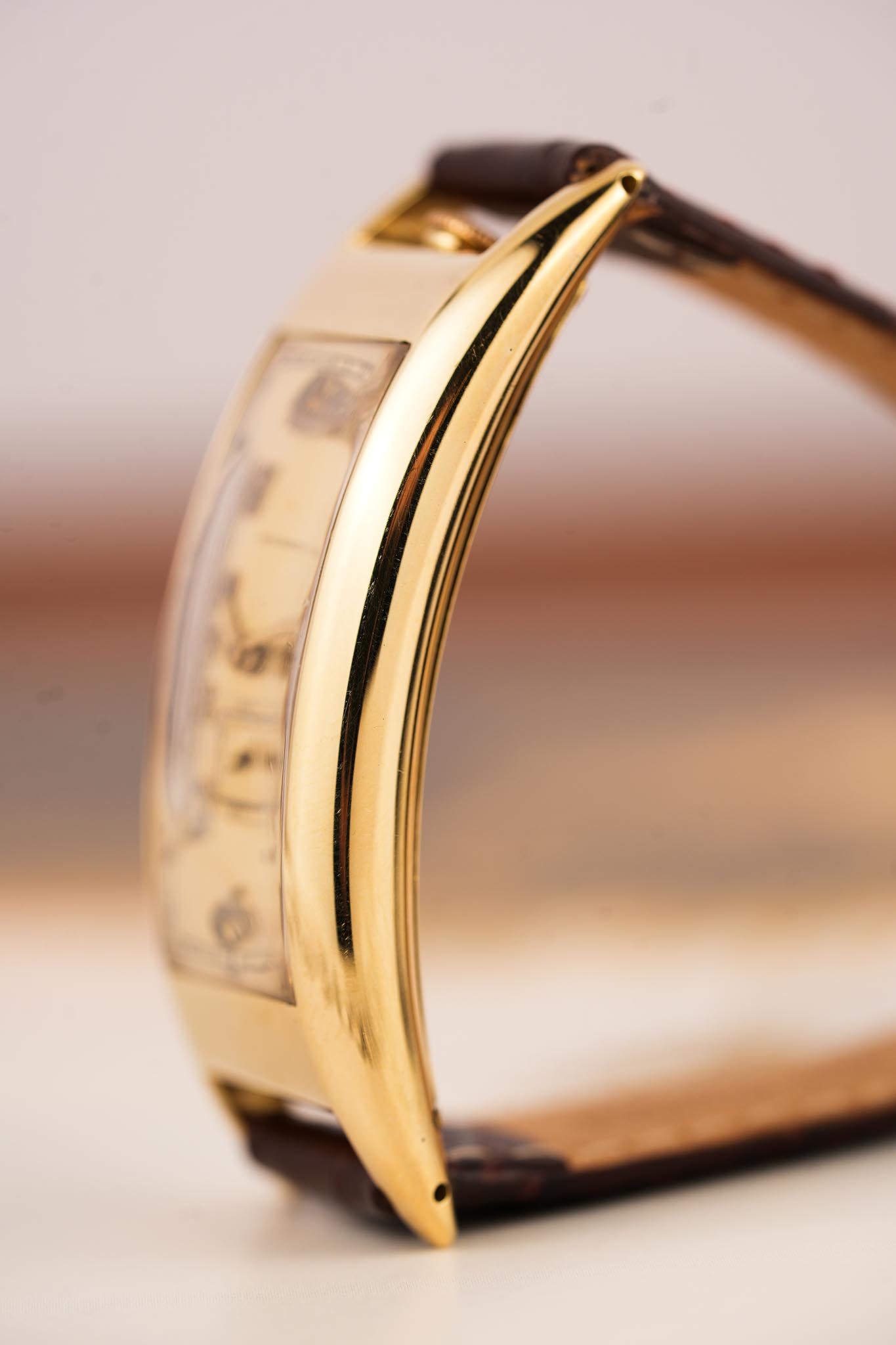
They built a movement across multiple planes. A flat center, then two angled sections at roughly 25 degrees on either side. Gears stepping up and down levels like a mechanical staircase. The result is a movement that fills the case properly, allowing for a larger balance and better performance, while still hugging the wrist in a way that feels… natural the second you put it on.
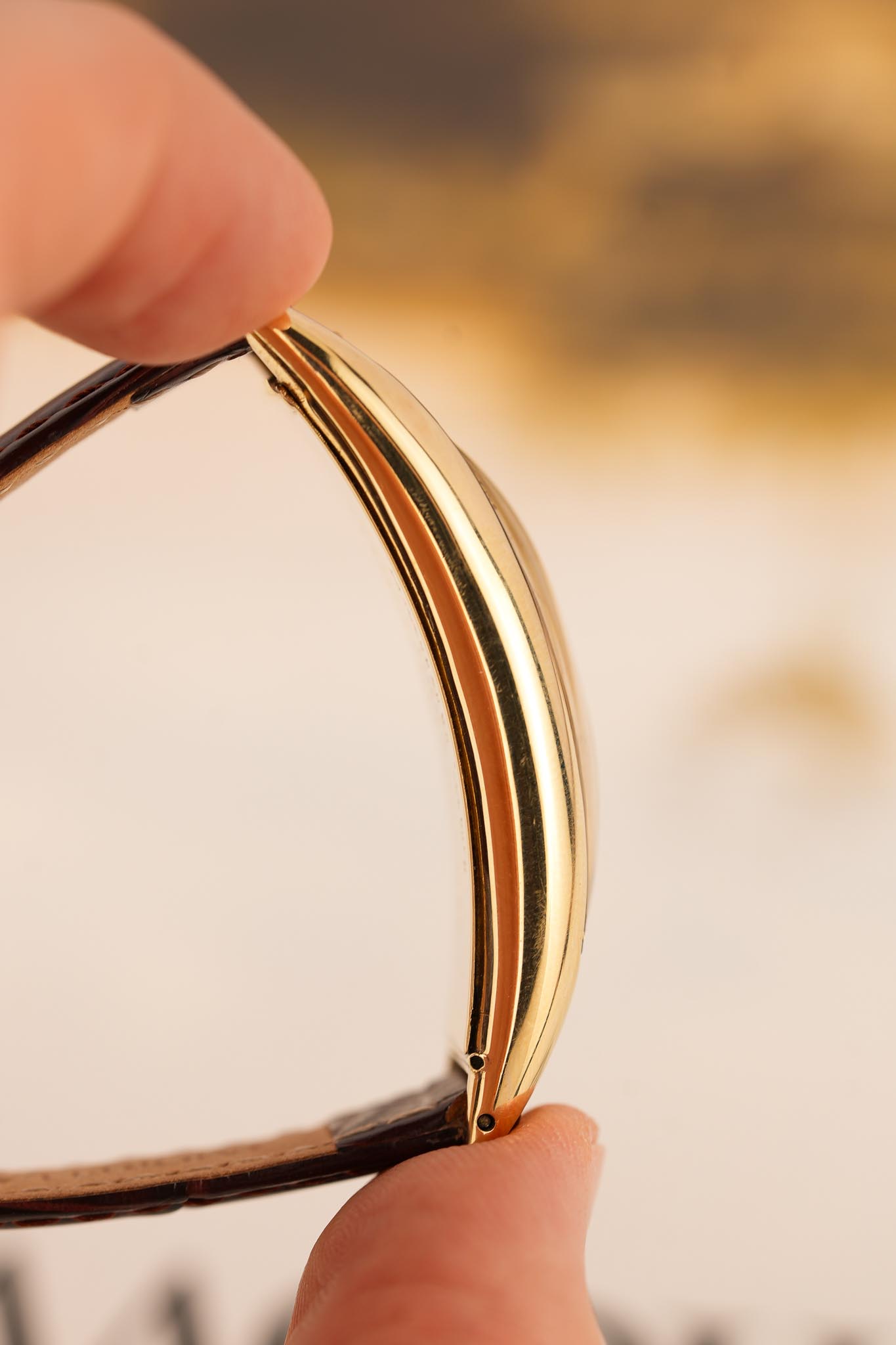
You feel it immediately. It doesn’t sit on the wrist, it wraps around it.
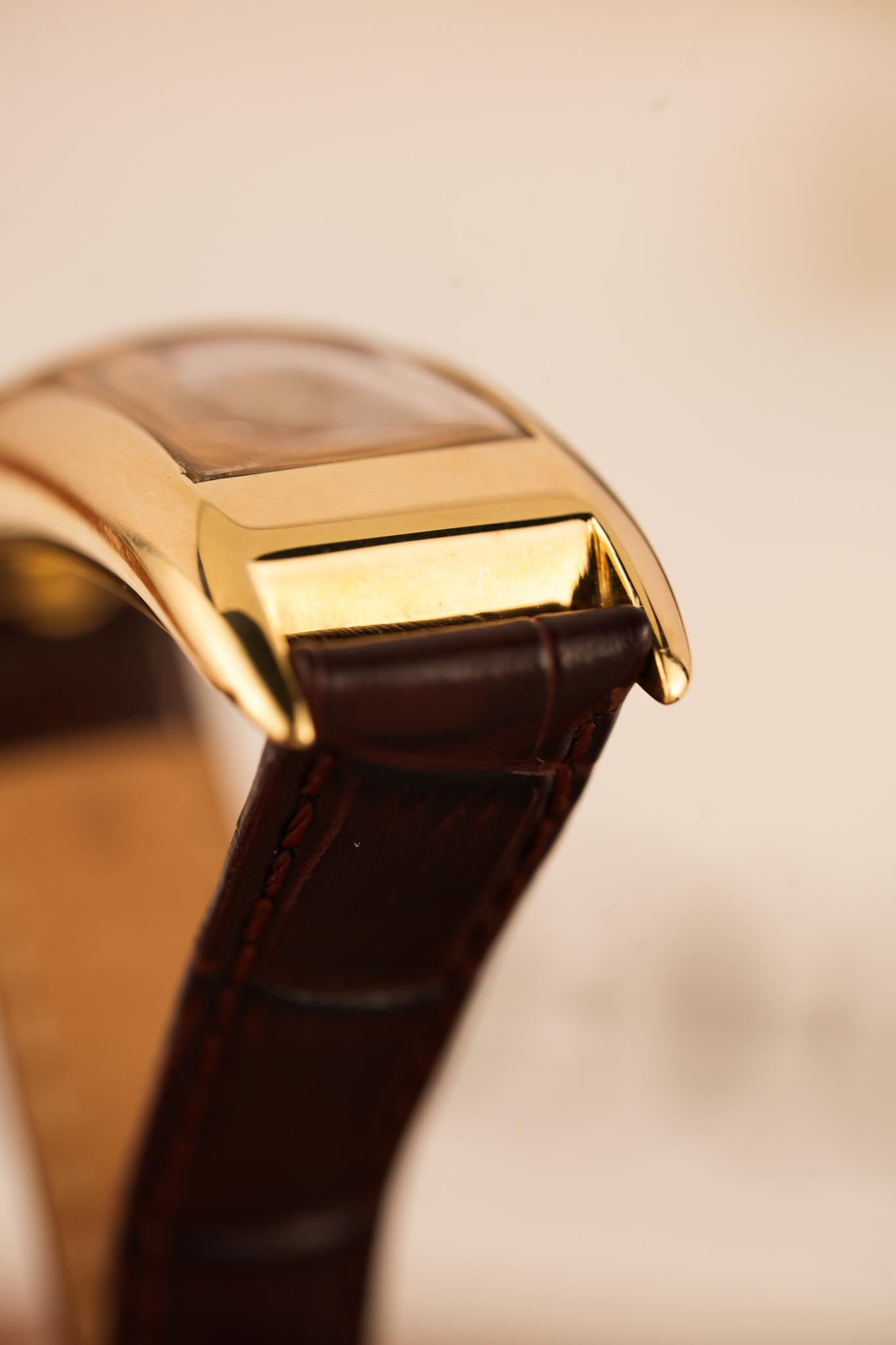
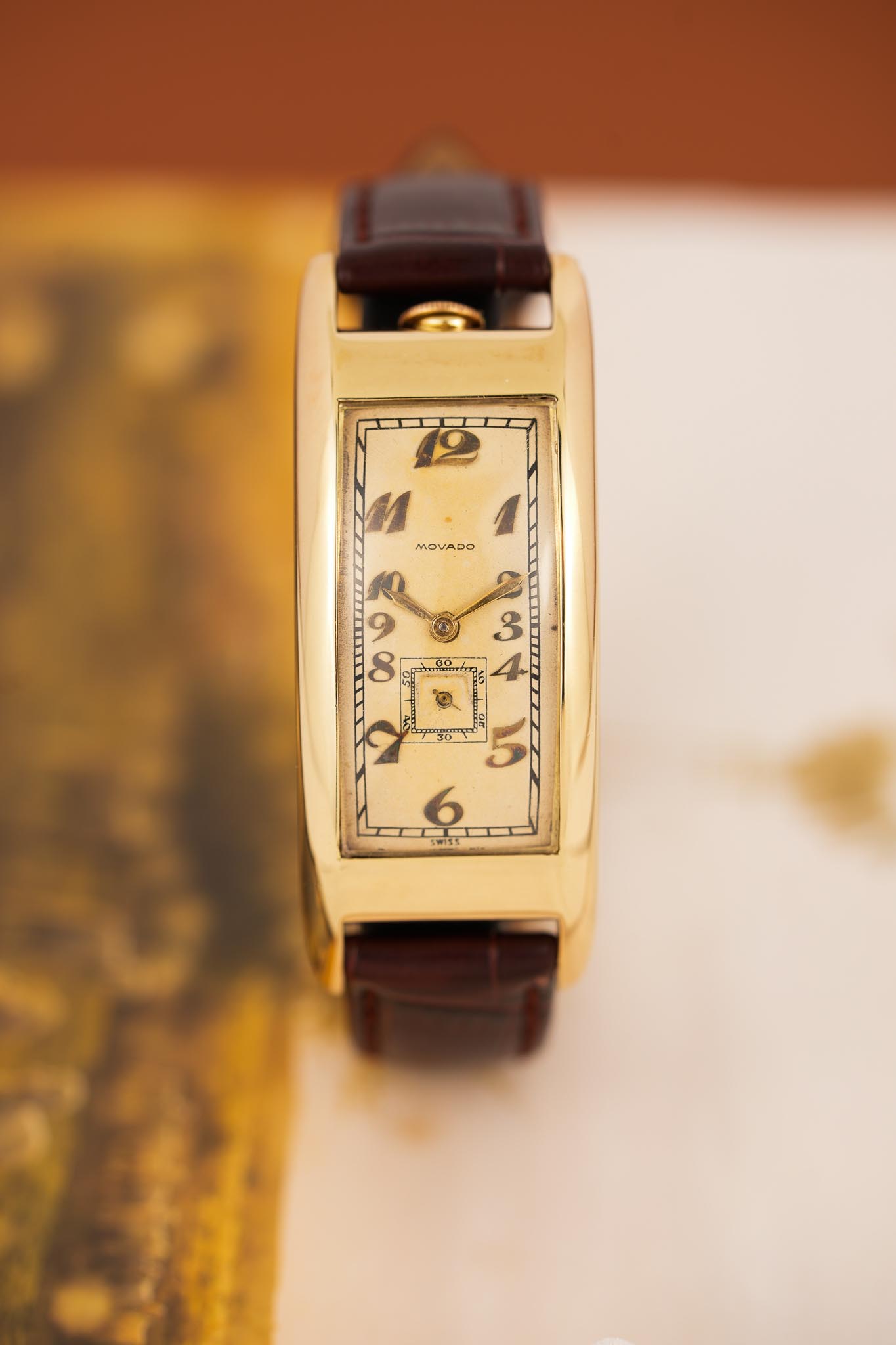
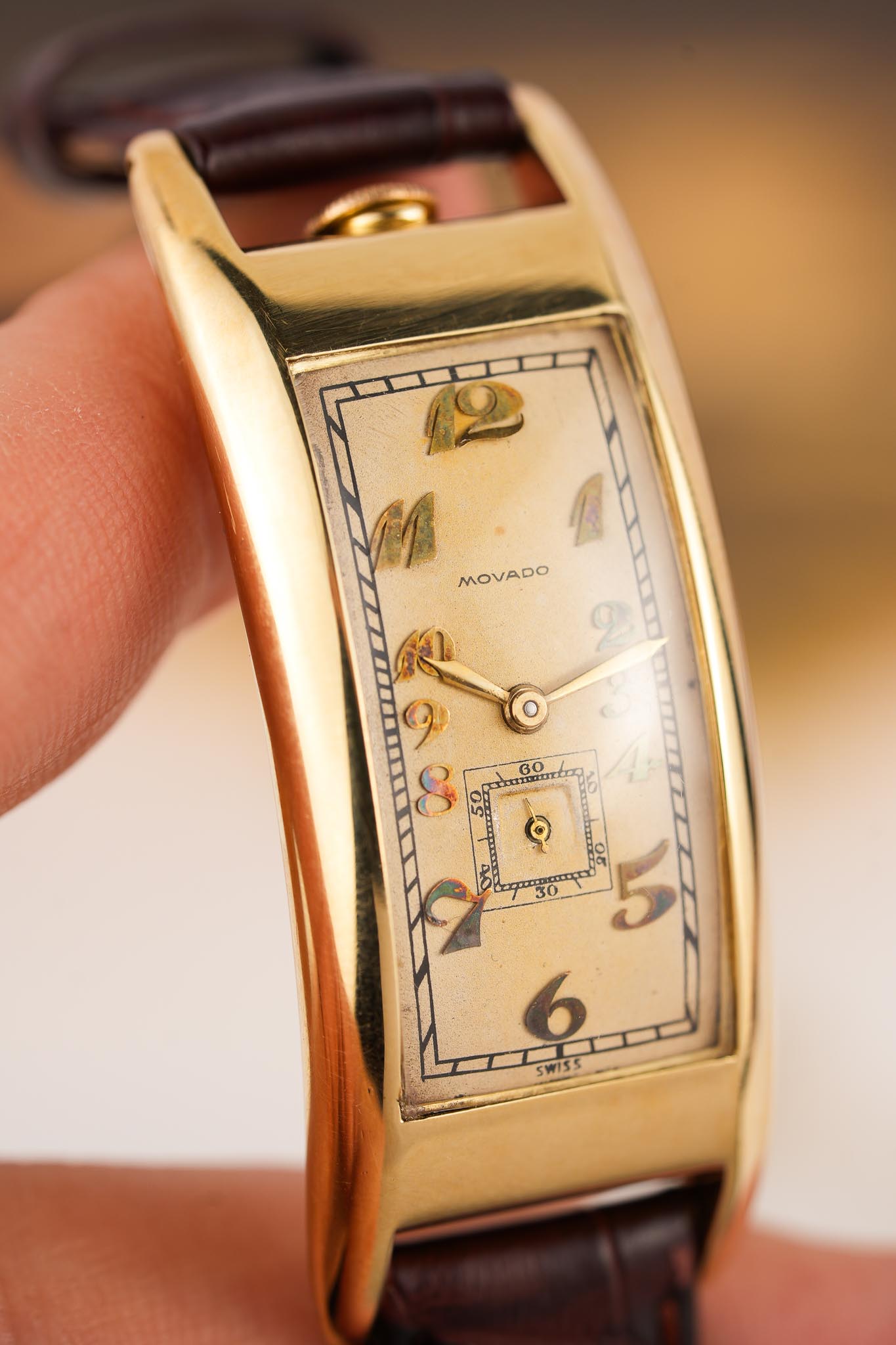
The case follows that same idea. Long, narrow, and dramatically curved, almost exaggerated by modern standards. 44mm in length (55mm lug to lug), but worn across the wrist it reads far more compact because of how it bends. From the side, it has that unmistakable arc that earned it the nickname “banana case,” decades before that became a category collectors chased.
Because of the complexity and cost to produce, total production is estimated at around 1,500 examples. The serial on this piece is 1512, placing it among the later batches and dating it to circa 1917.
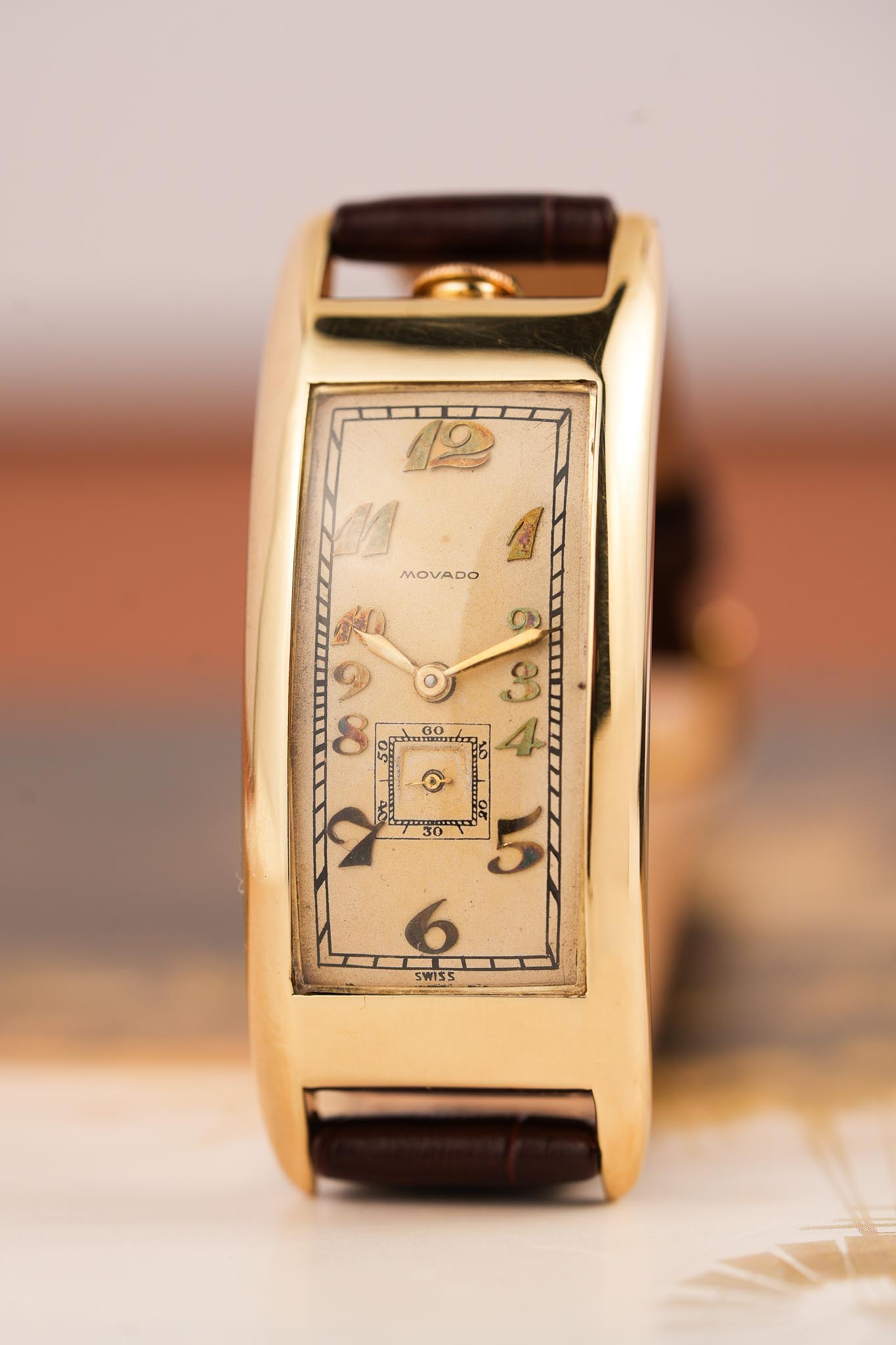
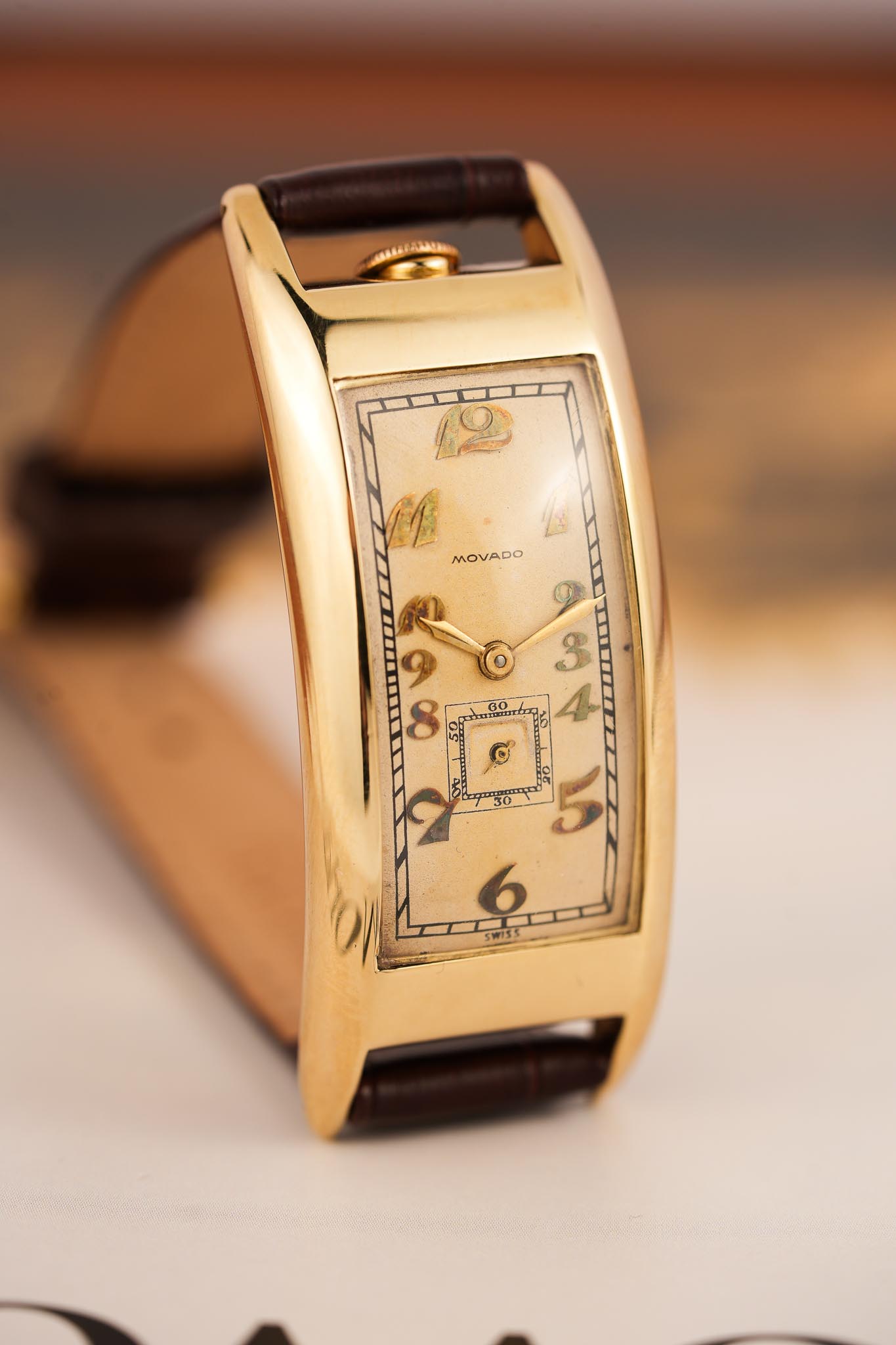
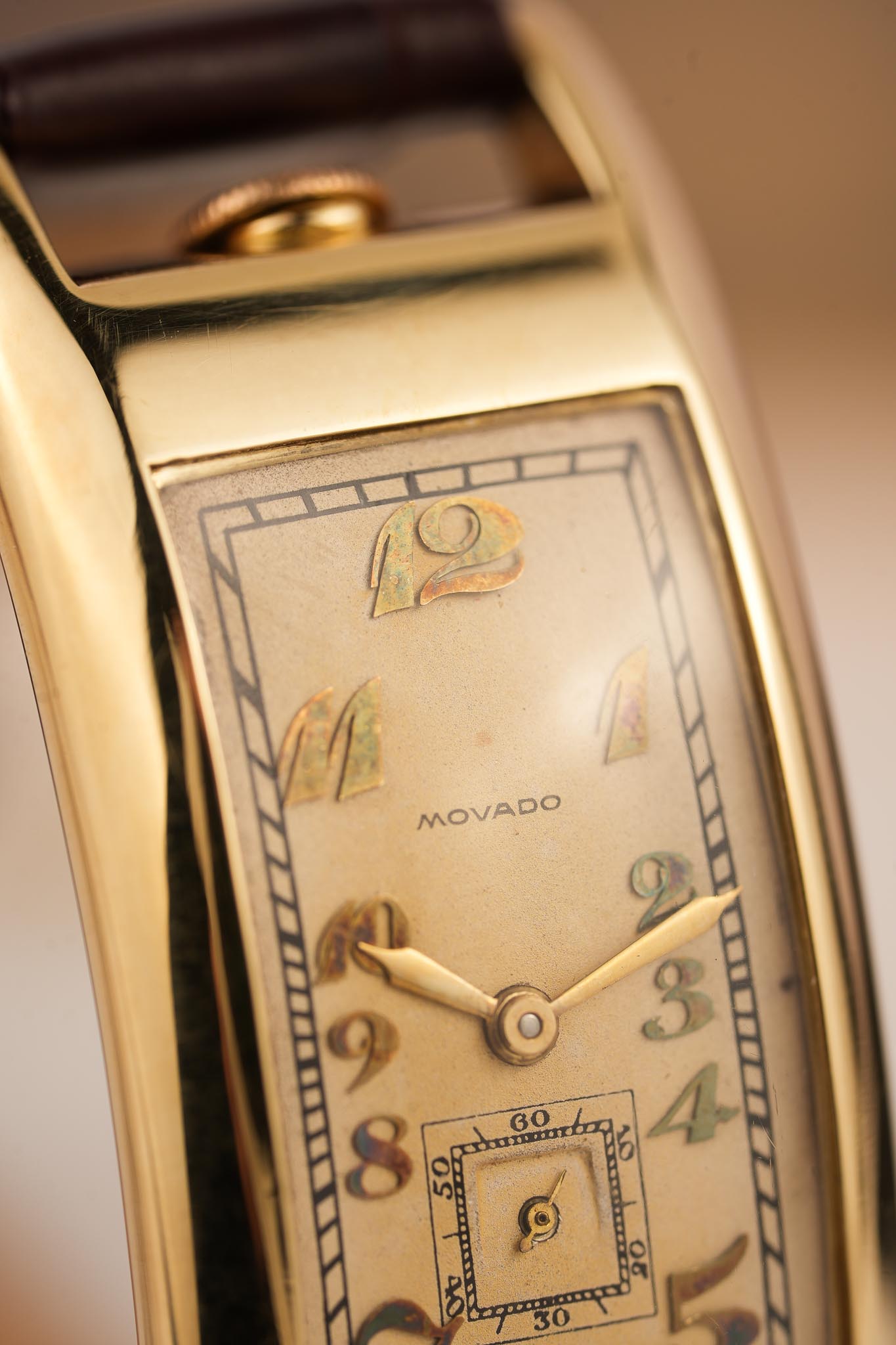
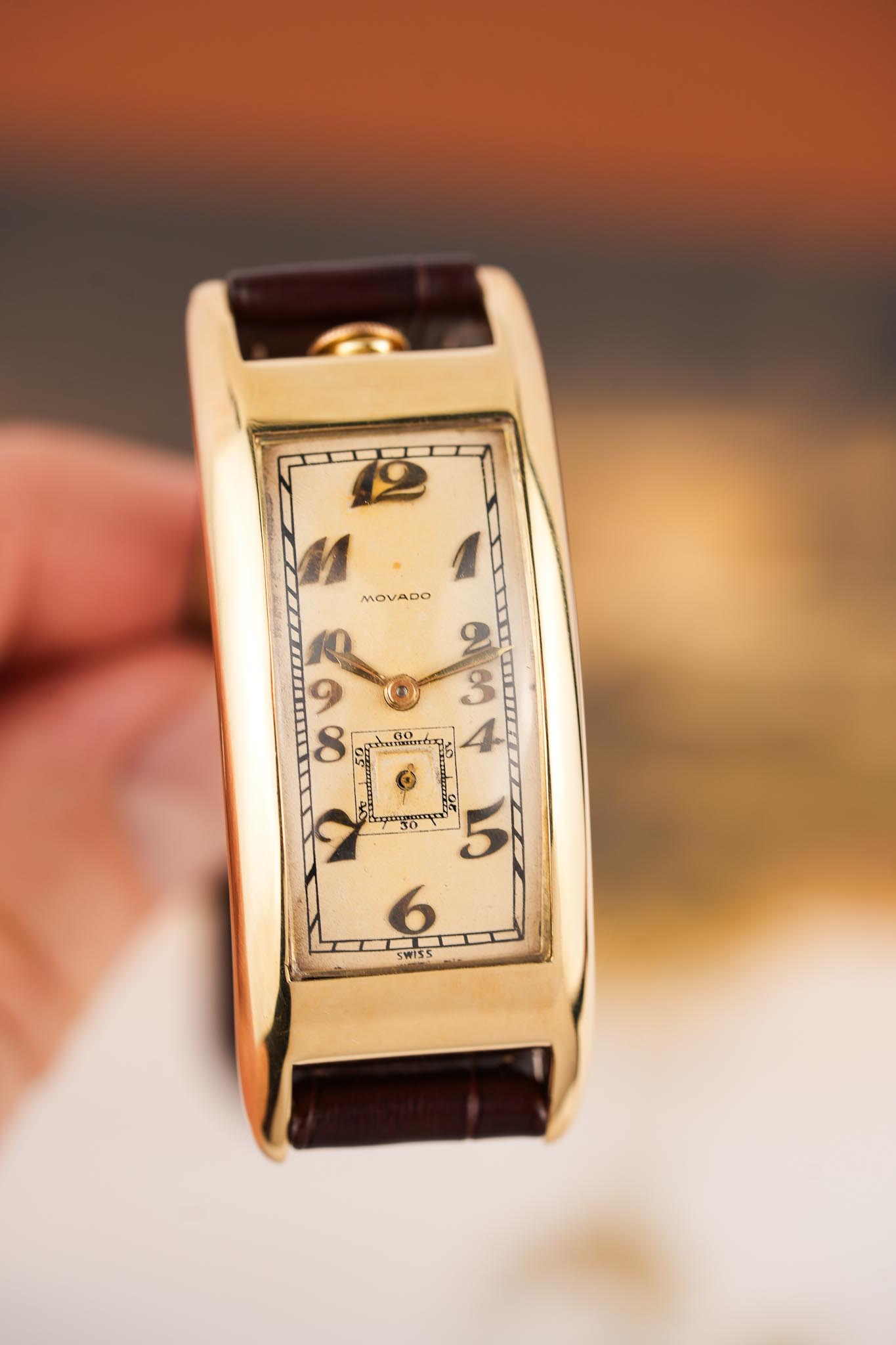
The dial is early 20th century design at its best. Applied Breguet numerals, each one slightly different in tone now—darkened gold, touches of orange, even hints of green that resemble aged copper rooftops across old European cities. It’s not uniform, and that’s exactly why it works. The rectangular minute track frames everything cleanly, while the small seconds at six brings a bit of structure back into an otherwise expressive layout.
There’s also a detail that tends to catch people off guard—the crown sits at 12 o’clock. It keeps the case uninterrupted along the sides and reinforces the verticality of the design. Winding it feels unfamiliar at first, then quickly becomes part of the experience.
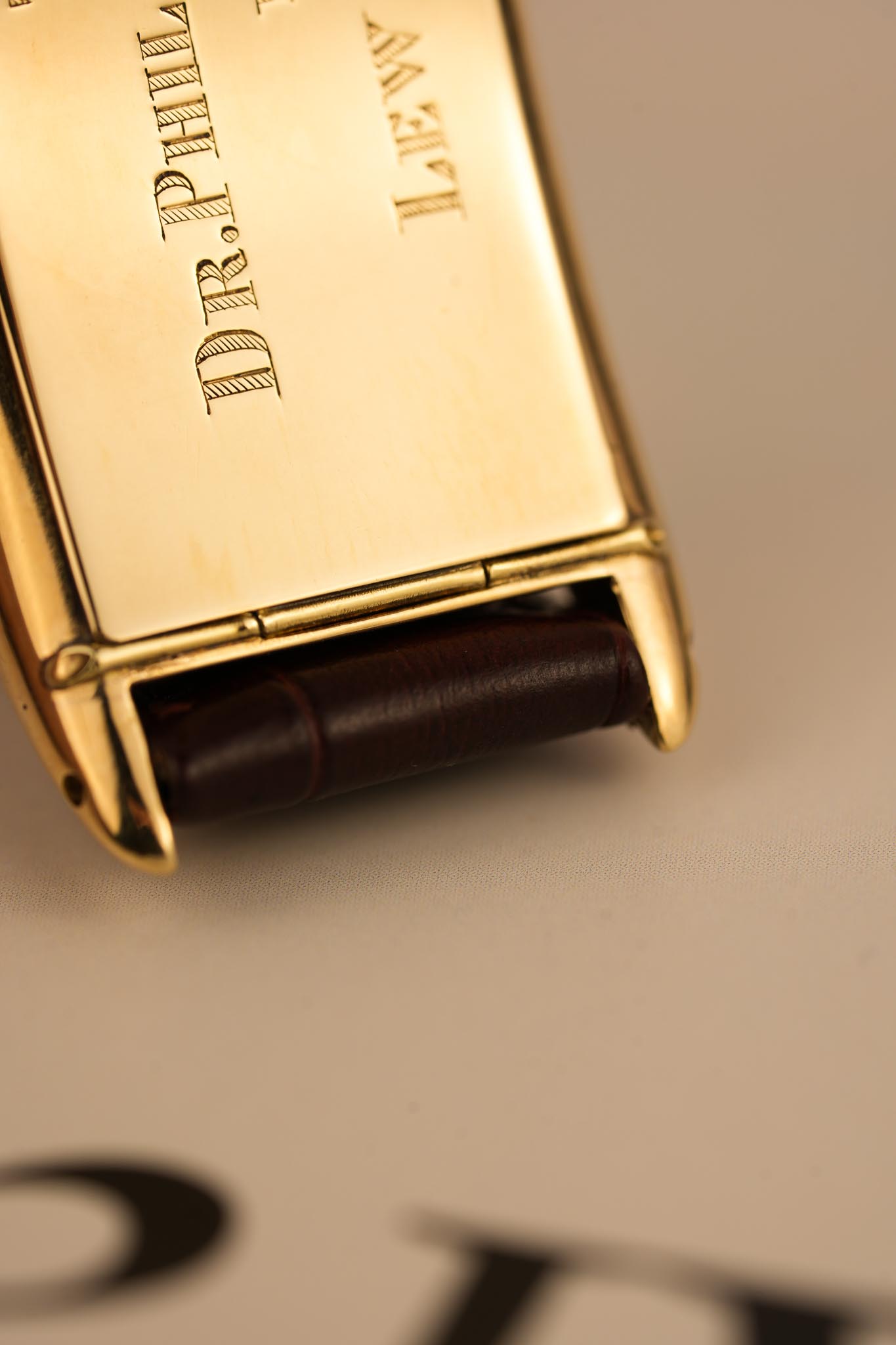
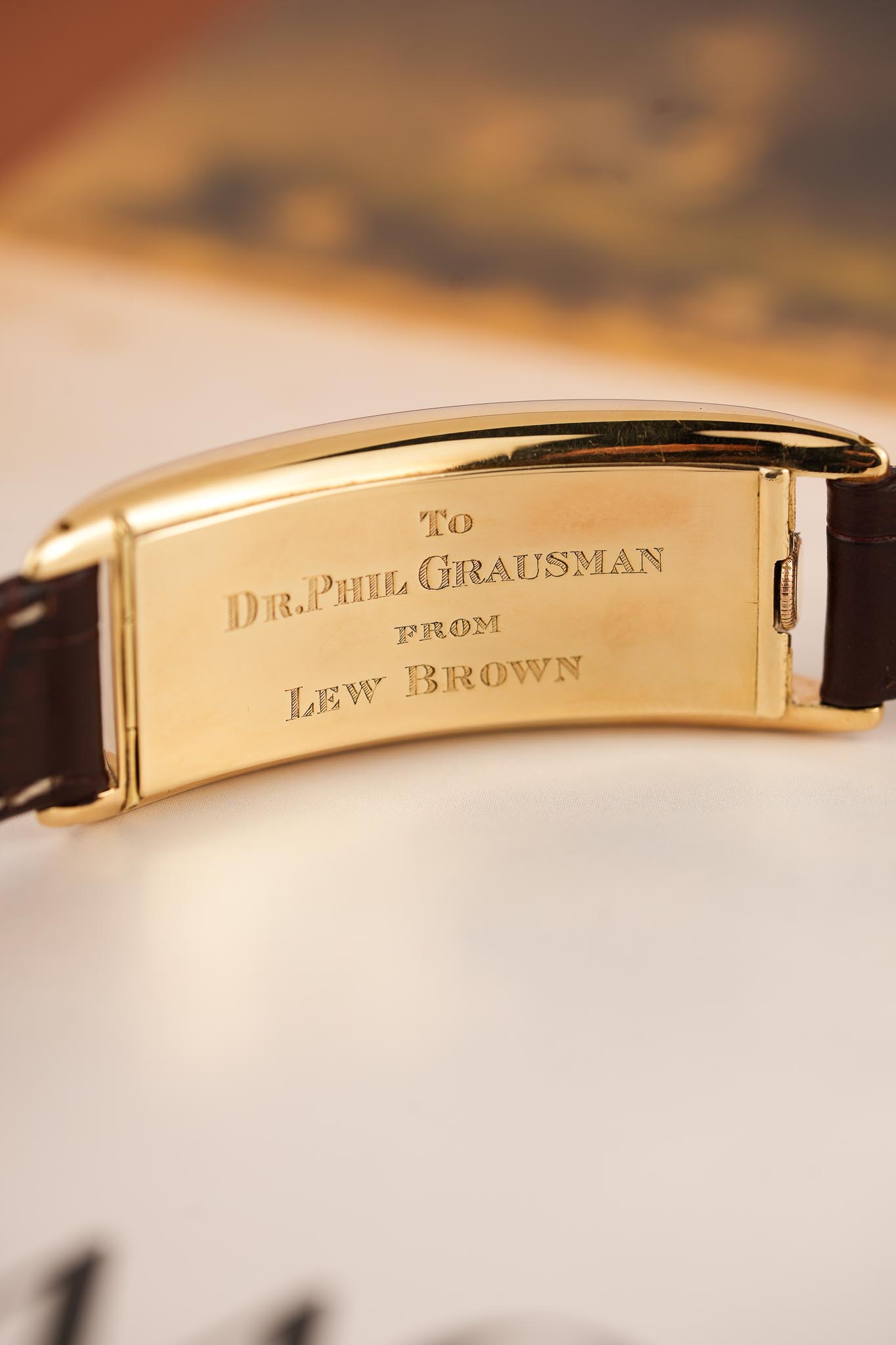
Turn it over and you get something you almost never see anymore. A personal engraving, “To Dr. Phil Grausman from Lew Brown.” A reminder that this wasn’t bought off a shelf—it was given, at a time when watches like this marked something meaningful.
Not many of these were made. Even fewer have made it through the past century intact.
Which is why when one does surface, especially in this form, it tends to stop people mid-scroll.
For the collector who already has the usual names covered and is now looking for something with real substance behind it, this is where things get interesting.

The watch is in very good overall vintage condition with honest wear consistent with age.
The 14k yellow gold case shows light surface wear with well-preserved proportions and strong curvature throughout.
The dial has aged evenly with a warm patina, and the applied Breguet numerals display oxidation in tones of gold, orange, and light green.
The caseback engraving “To Dr. Phil Grausman from Lew Brown” remains crisp and legible.
The hands are original and match the period correctly, with a clean handset and clear crystal.
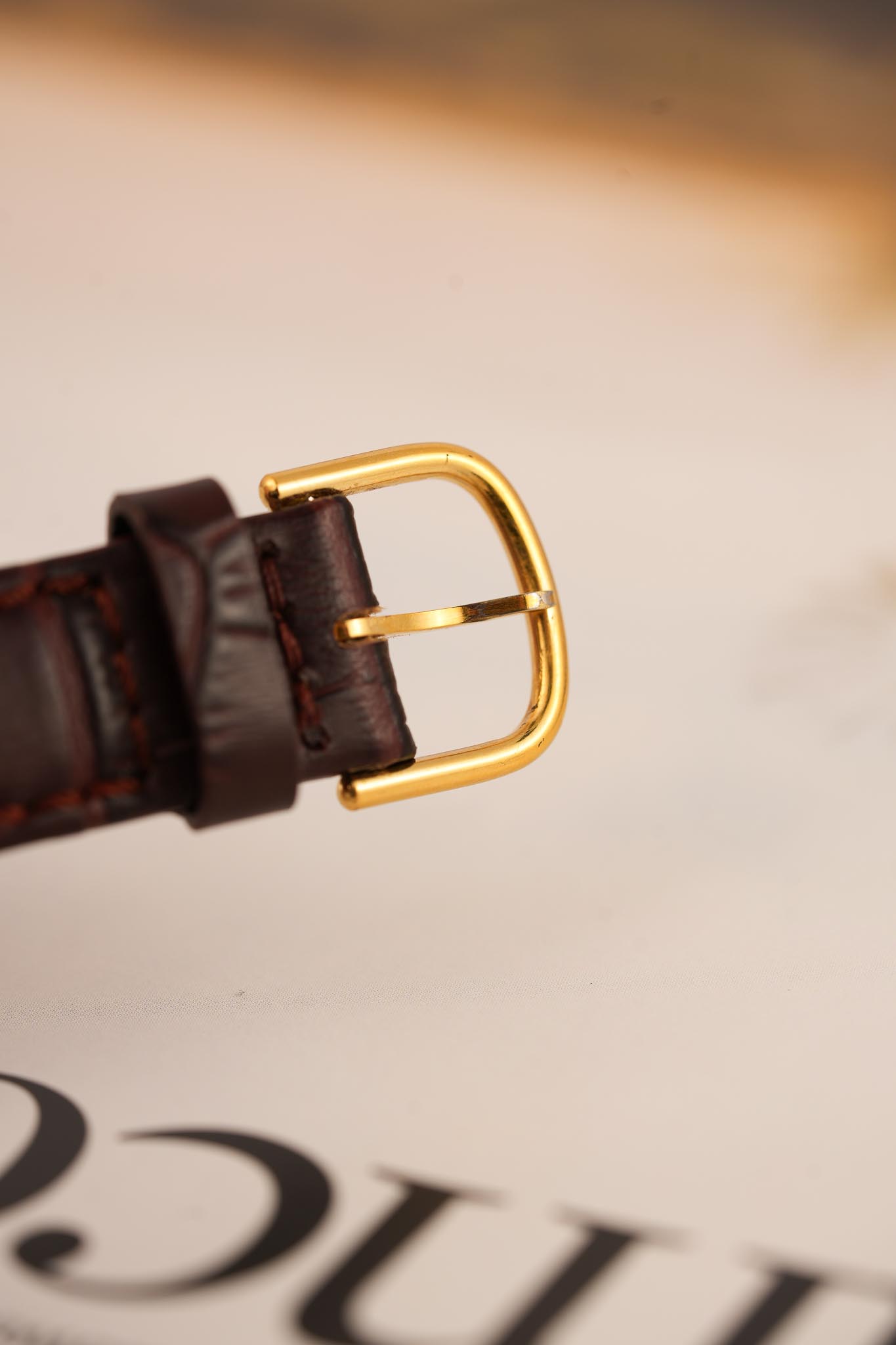
The watch is fitted on a burgundy leather strap with a gold plated buckle.
The manual-wound movement is running and functioning as expected.
Ordering: Please provide your name, address, email, and phone number. An invoice will be emailed with payment instructions, along with a shipping quote tailored to your location.
Shipping: Fully insured via FedEx, DHL, or UPS. Ships within two business days after payment clears. Worldwide shipping available.
US Tariffs: We take a thoughtful cross-border approach to keep import costs low with no unexpected surprises.
To learn more, click here.
We are here to be your trusted source of romantic vintage watches. We stand behind the products we curate with a 100% authenticity guarantee, a 1 year warranty and a 3-day return policy to ensure you are completely satisfied with your purchase.