.svg)

The Earth, Cut Square.
The 1970s were a wild time for watch design, and Piaget decided subtle experimentation wasn’t enough. They went straight to the earth.
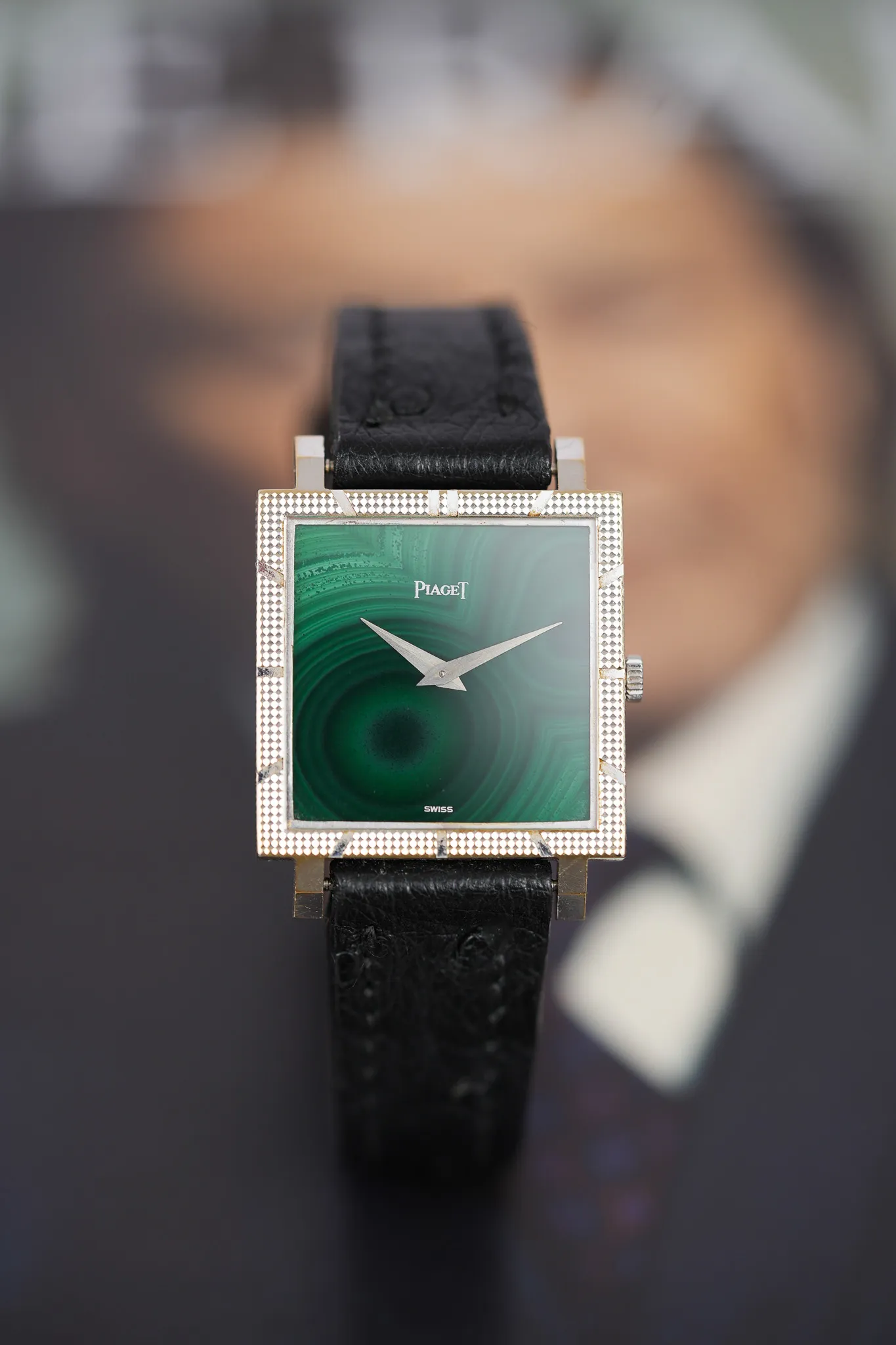
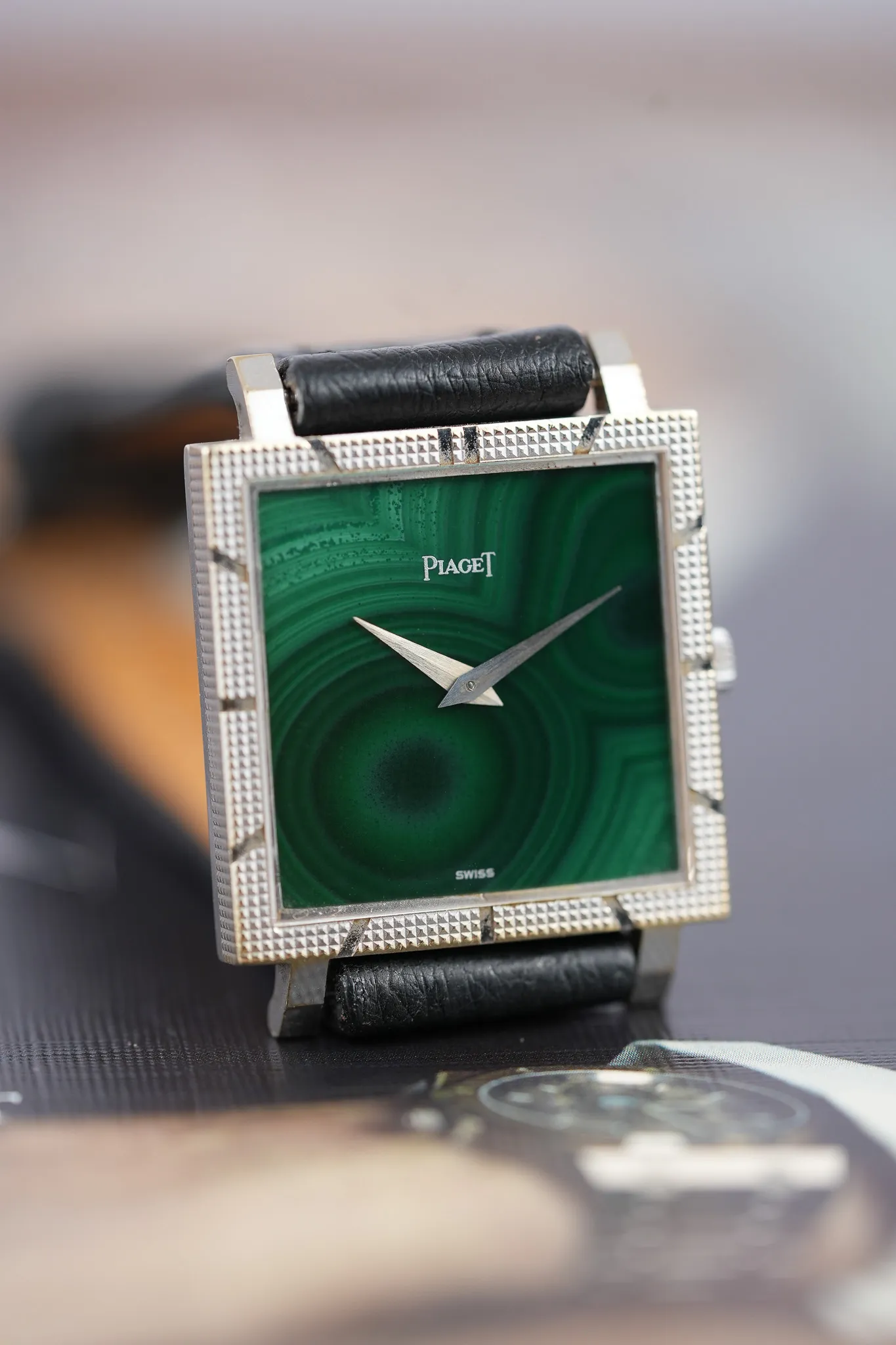
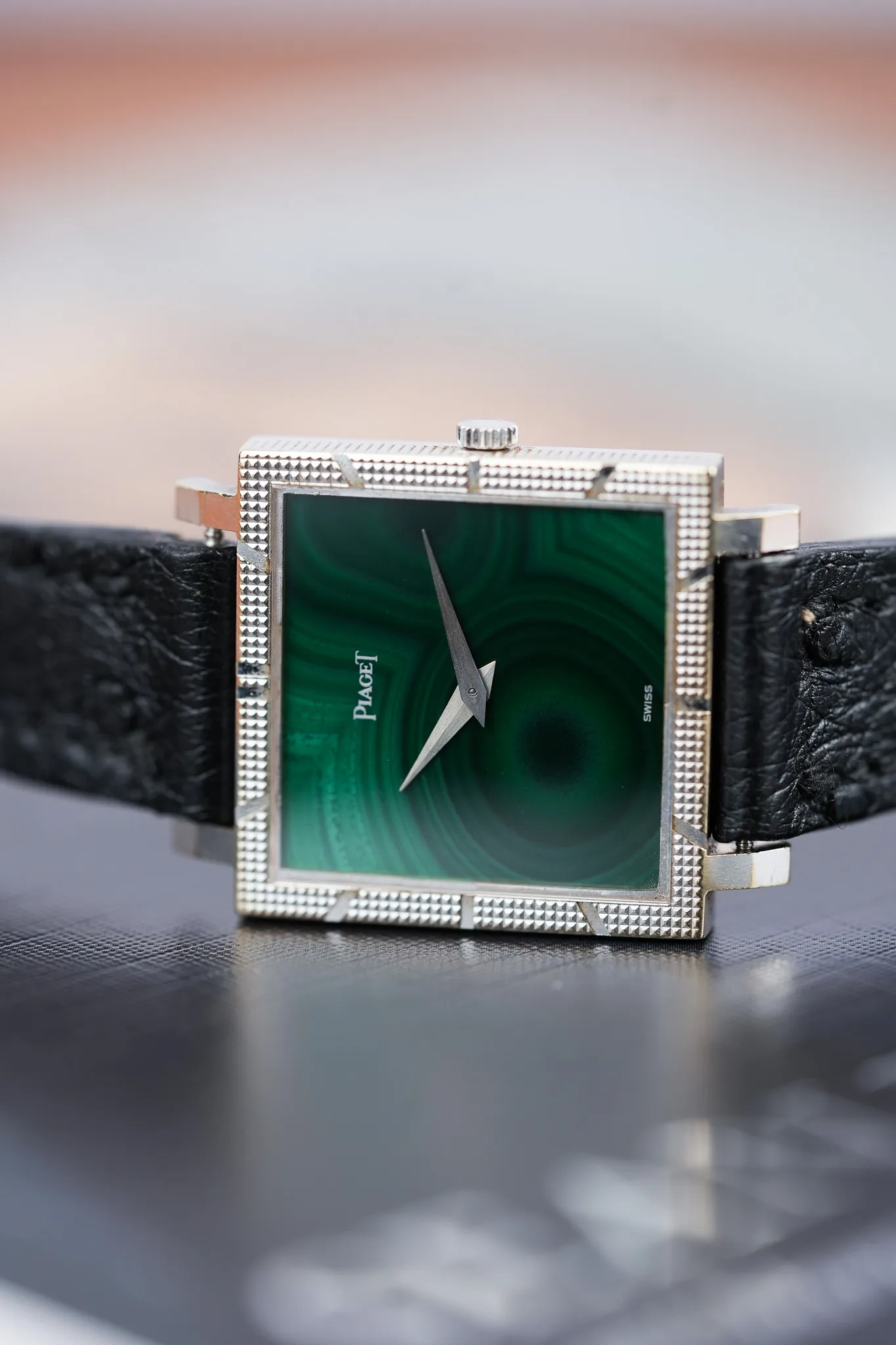
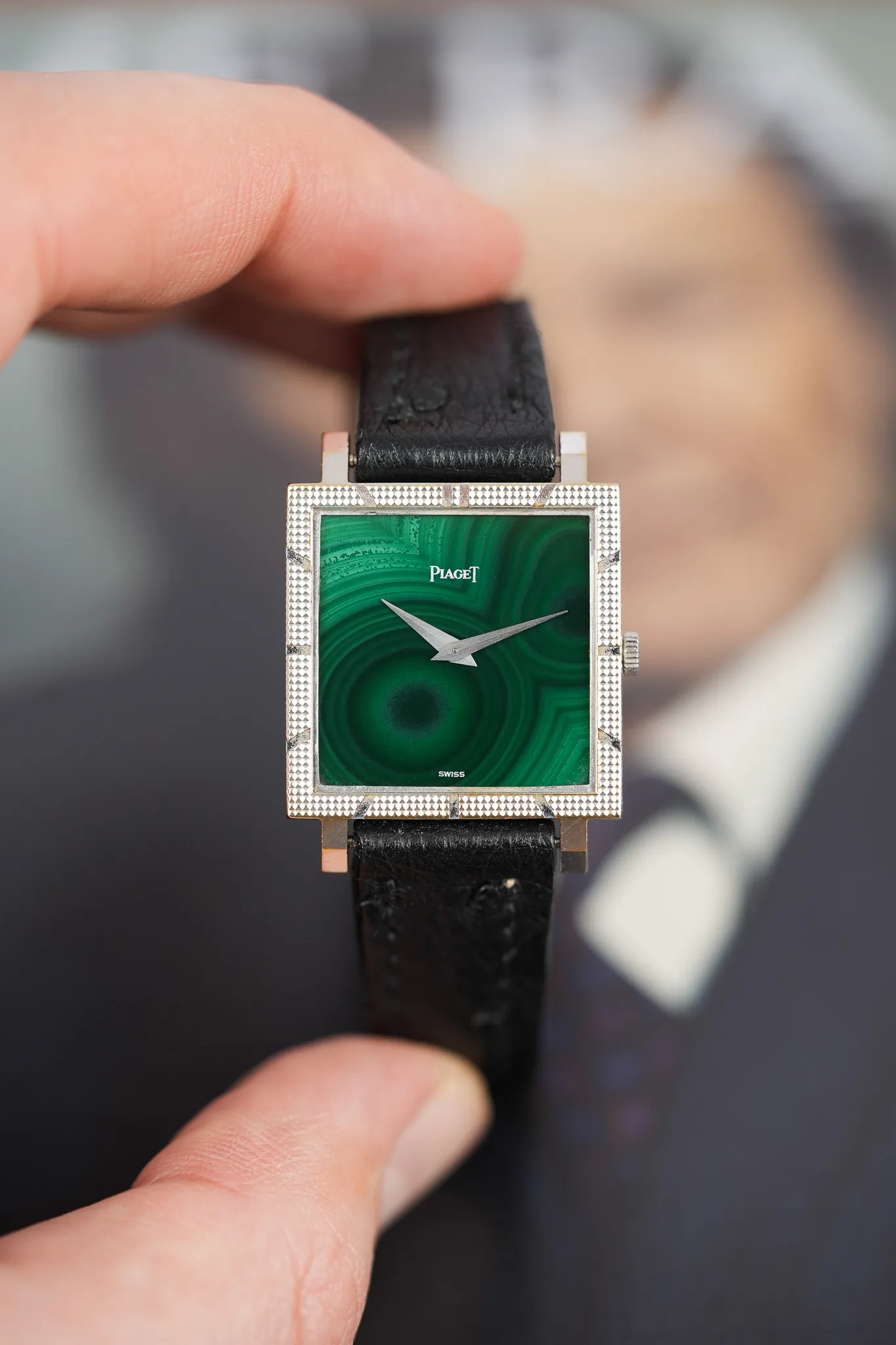
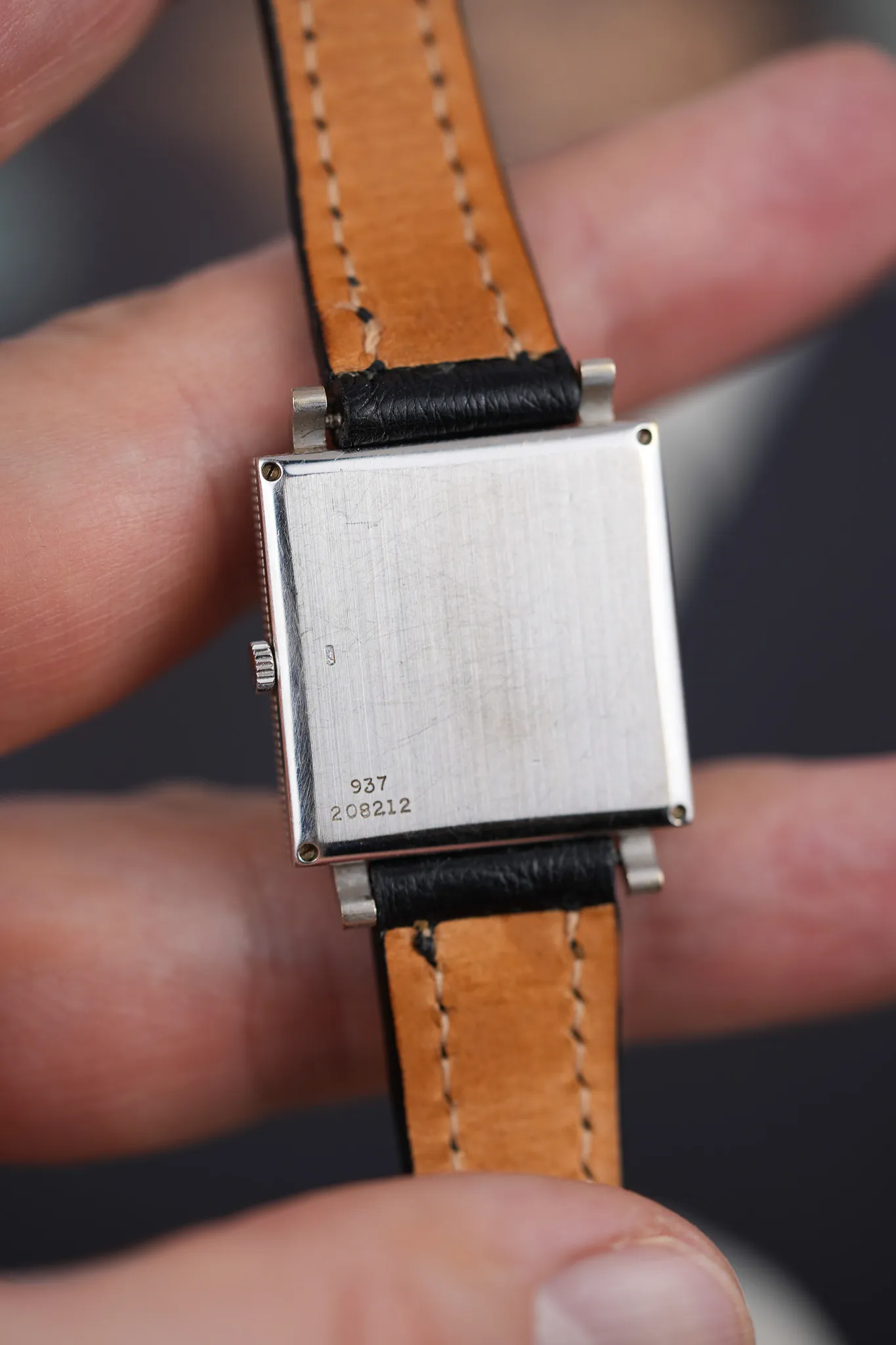
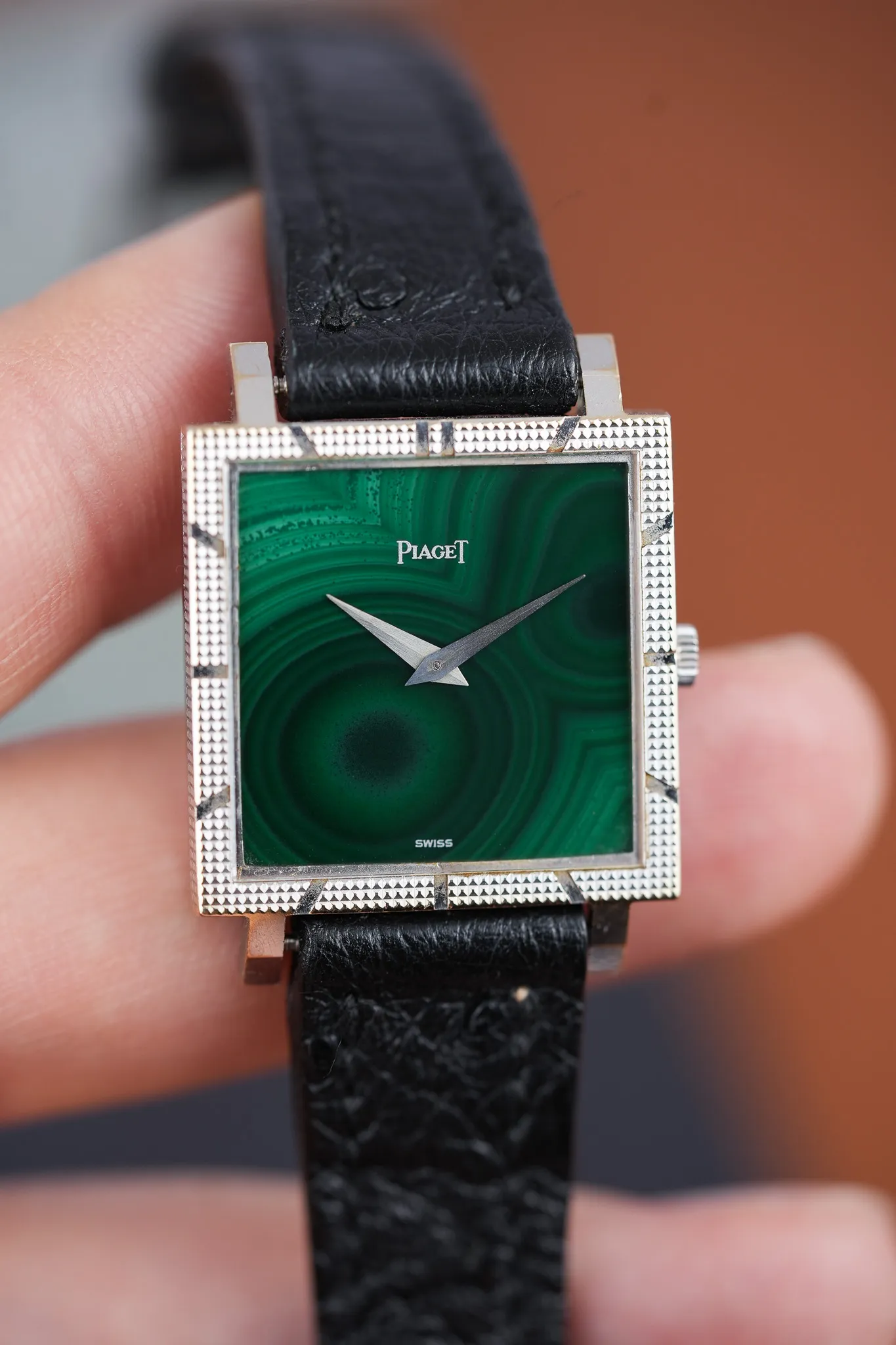
This Carrée is peak era Piaget. A 25 by 25 millimeter square in 18k white gold, framed in hobnail texture, powered by their ultra-thin manual-wound 9P movement, and crowned with one of the rarest stone dials they ever used: malachite.
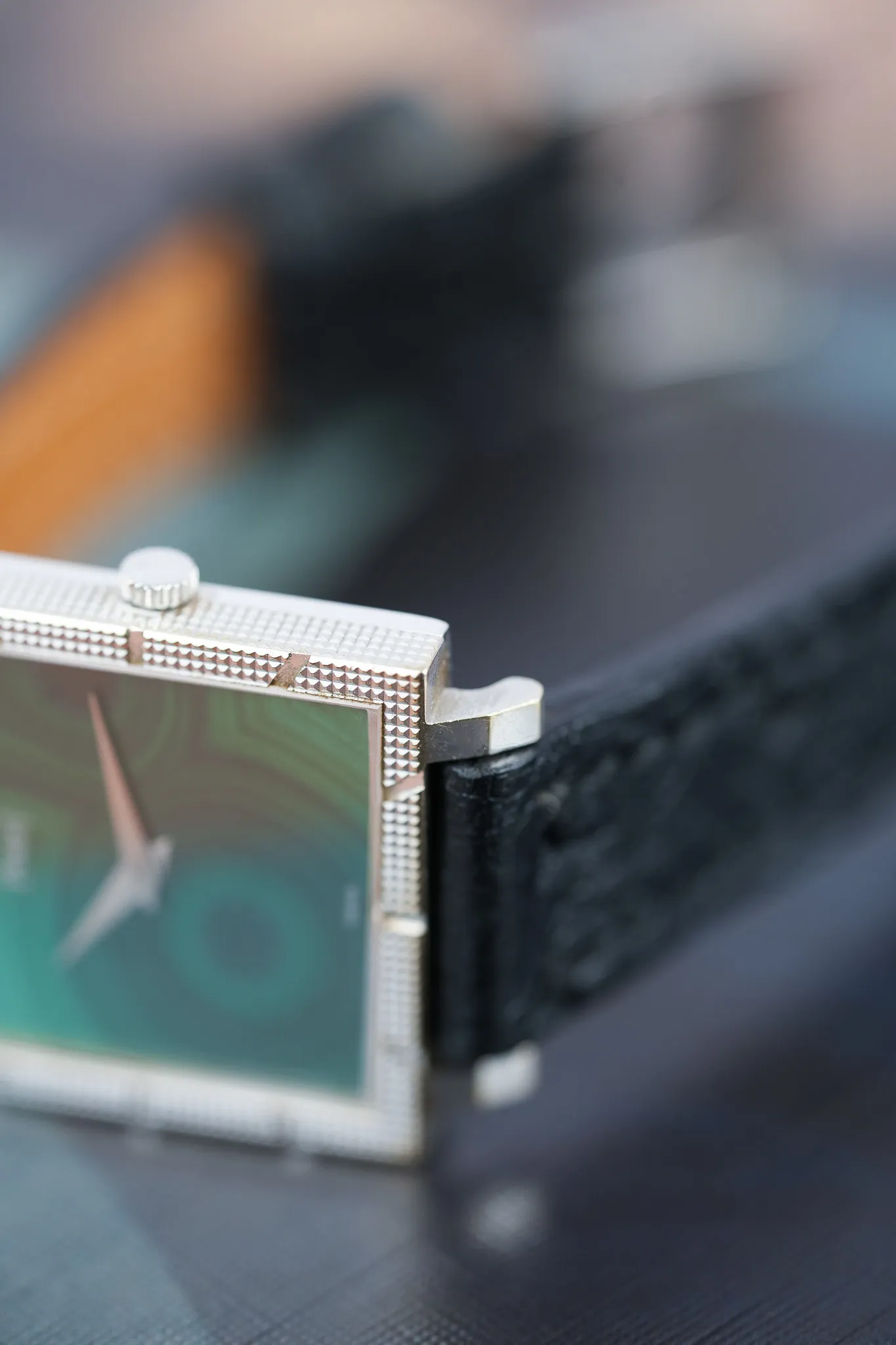
Malachite isn’t just green. It’s layered. It forms in bands and waves, each slice revealing rings and eyes that feel almost alive. Look closely at this dial and you’ll notice two darker circular formations, like pupils suspended in emerald water. Those are completely natural. No two malachite dials are ever the same, and most don’t survive the cutting process intact. These stones are sliced into impossibly thin sheets before being mounted onto the movement. One wrong move and the entire slab fractures. The fact that this example is free of cracks or chips is remarkable.
Piaget made its name in this period by mastering stone dials. Lapis, onyx and tiger’s eye. Malachite sits at the top of that hierarchy in terms of rarity. It was difficult to source, difficult to cut, and difficult to execute at this level. That’s exactly why it mattered.
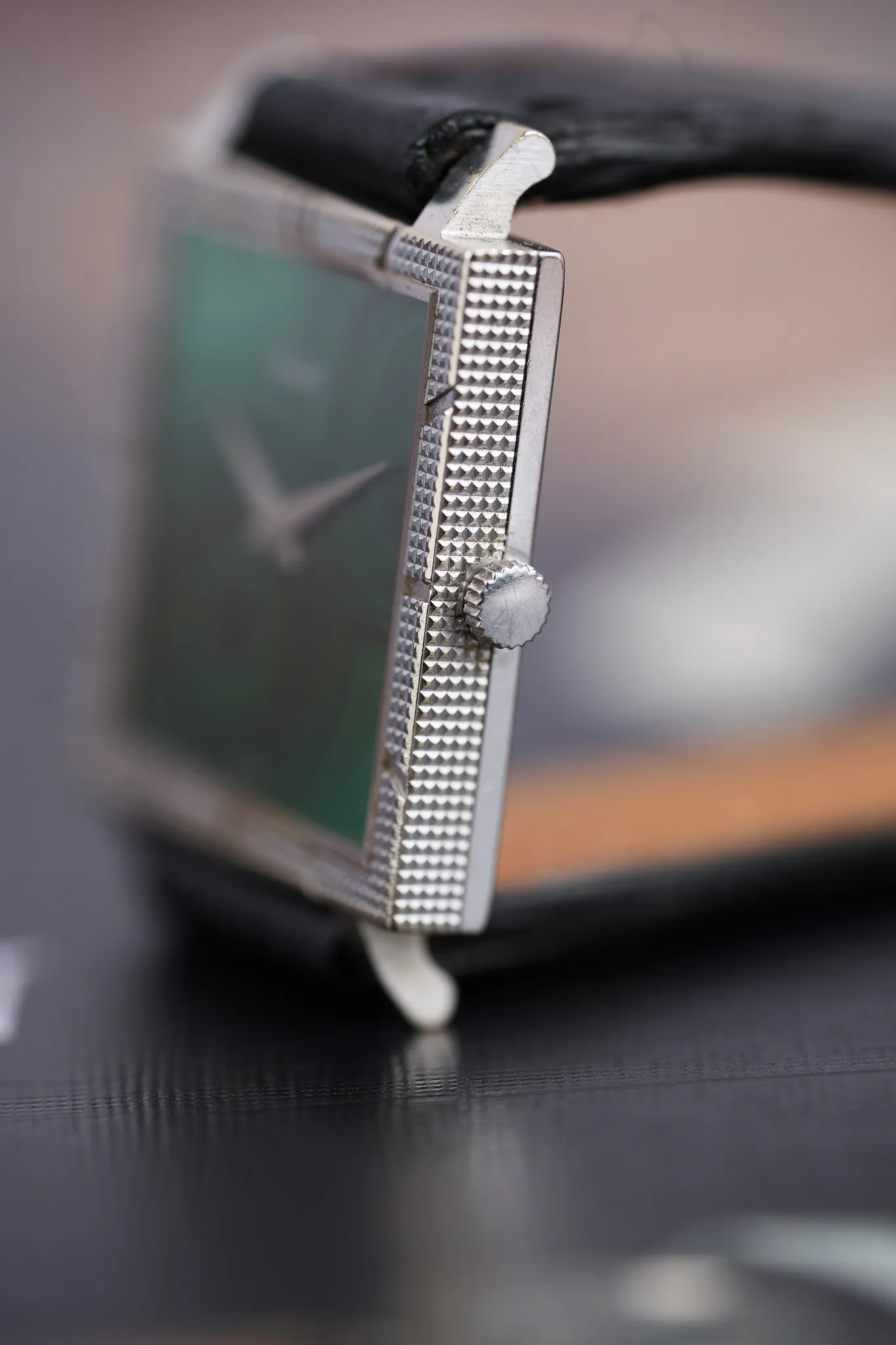
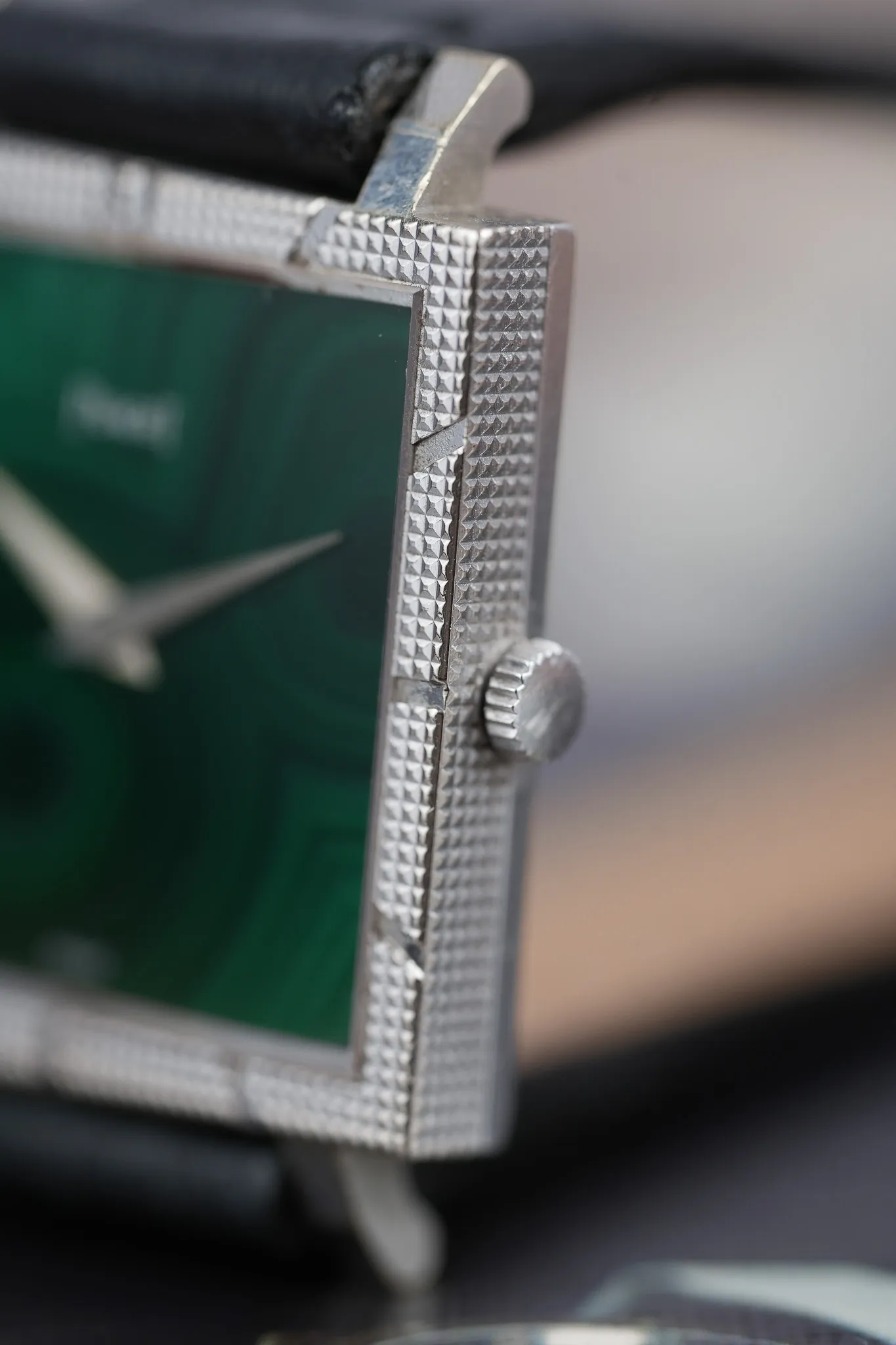
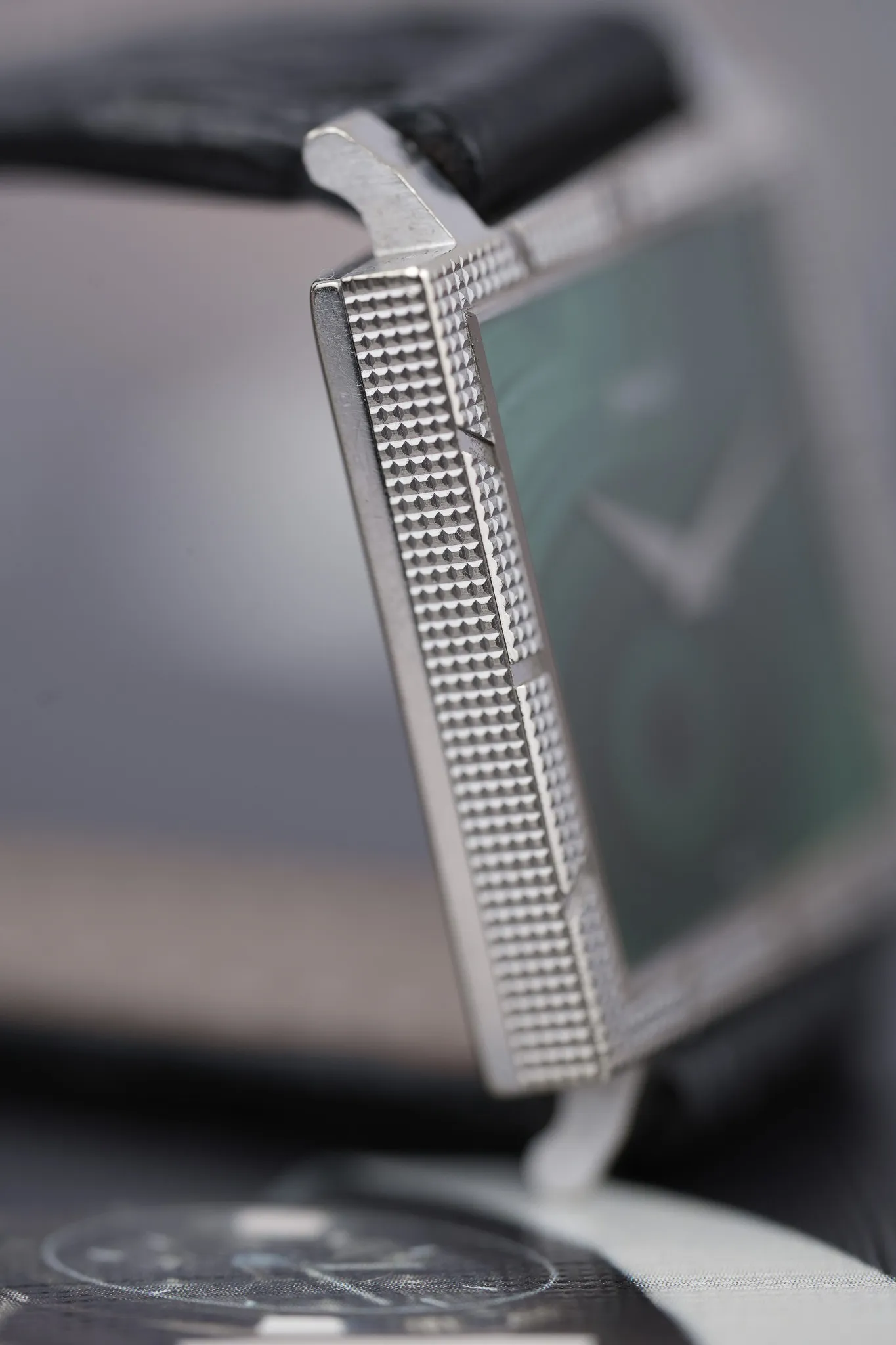
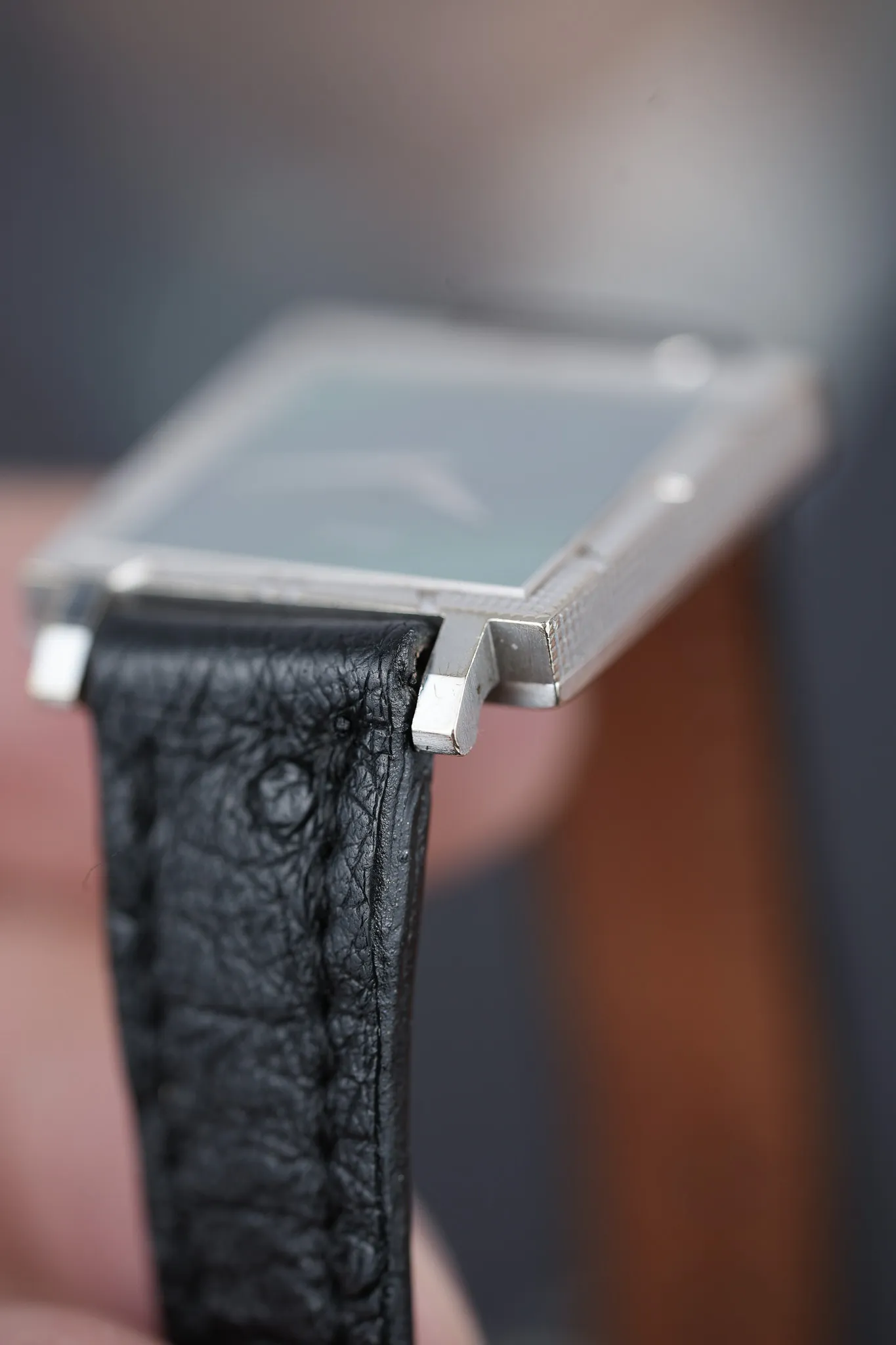
Then there’s the case. The Carrée, French for square, sounds simple enough until you study it in hand. The hobnail finish wraps not just the bezel but the sides of the case as well, giving what could have been a flat square a deep, tactile surface. Around the bezel you’ll see small slits aimed inward toward the dial. They add tension to the design, but they also double as your hour orientation since there are no traditional indices. Form serving function without screaming about it.
The lugs continue the theme. Rather than straight protrusions, they step outward in a faceted pivot that reinforces the sharp design language of the watch. They thought about every detail.
Inside sits the Piaget 9P, at the time one of the thinnest mechanical movements ever made. This is important. During this era many high-end houses were sourcing movements externally. Piaget was building their own ultra-thin calibers in-house while also finishing cases like a master goldsmith. Fully integrated, decades before it became a marketing slogan.
On the wrist, this Carrée does something most watches can’t. The malachite radiates. The green shifts in different light, sometimes deep forest, sometimes electric emerald. It's not from a factory, it's from mother nature. You’re wearing a slice of mineral formed over millions of years, now framed in white gold.
Sure you can buy this to check the time. But you really buy this because it changes the way you feel when you glance down at your wrist.

The watch presents in excellent overall condition with strong case definition and a pristine stone dial.
The 18k white gold case retains crisp edges with well-preserved hobnail finishing across the bezel and sides, showing only light surface wear consistent with age.
The malachite dial is free of cracks, chips, or fractures, with vivid natural banding and deep tonal variation.
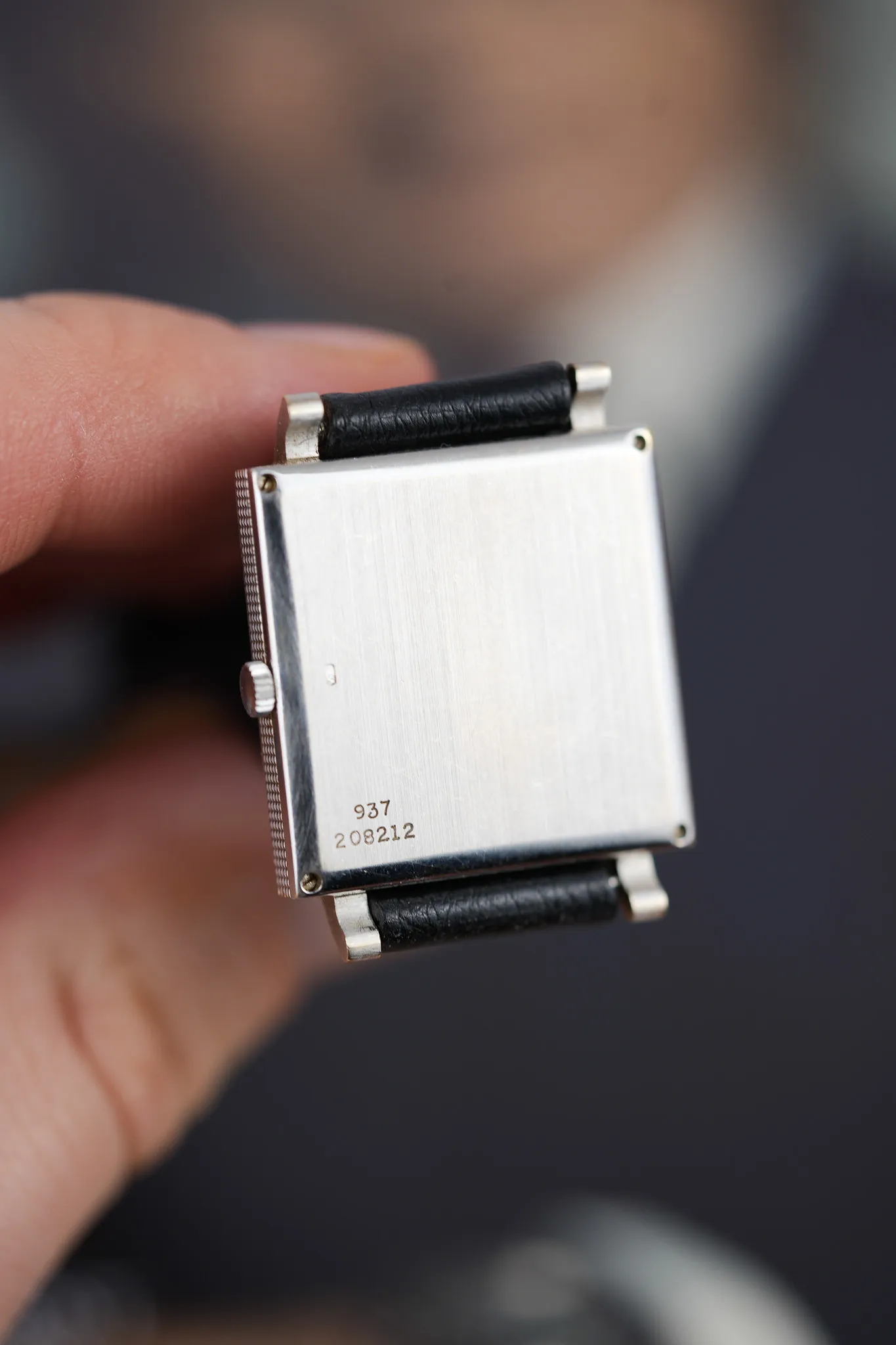
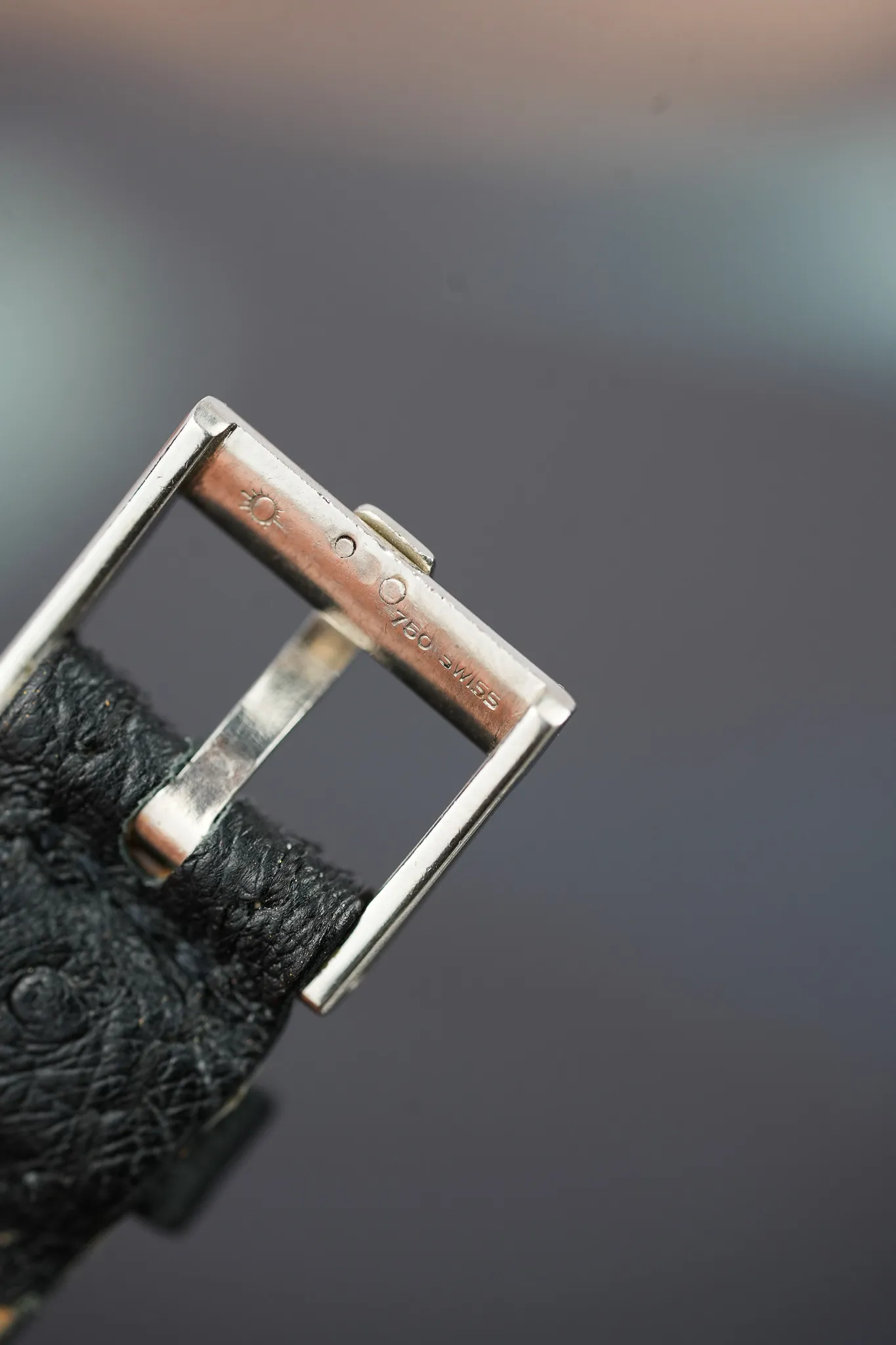
The caseback shows sharp hallmarks and reference engravings with light hairlines from normal wear.
The original hands are clean and free of corrosion, and the crystal remains clear with minor surface marks.
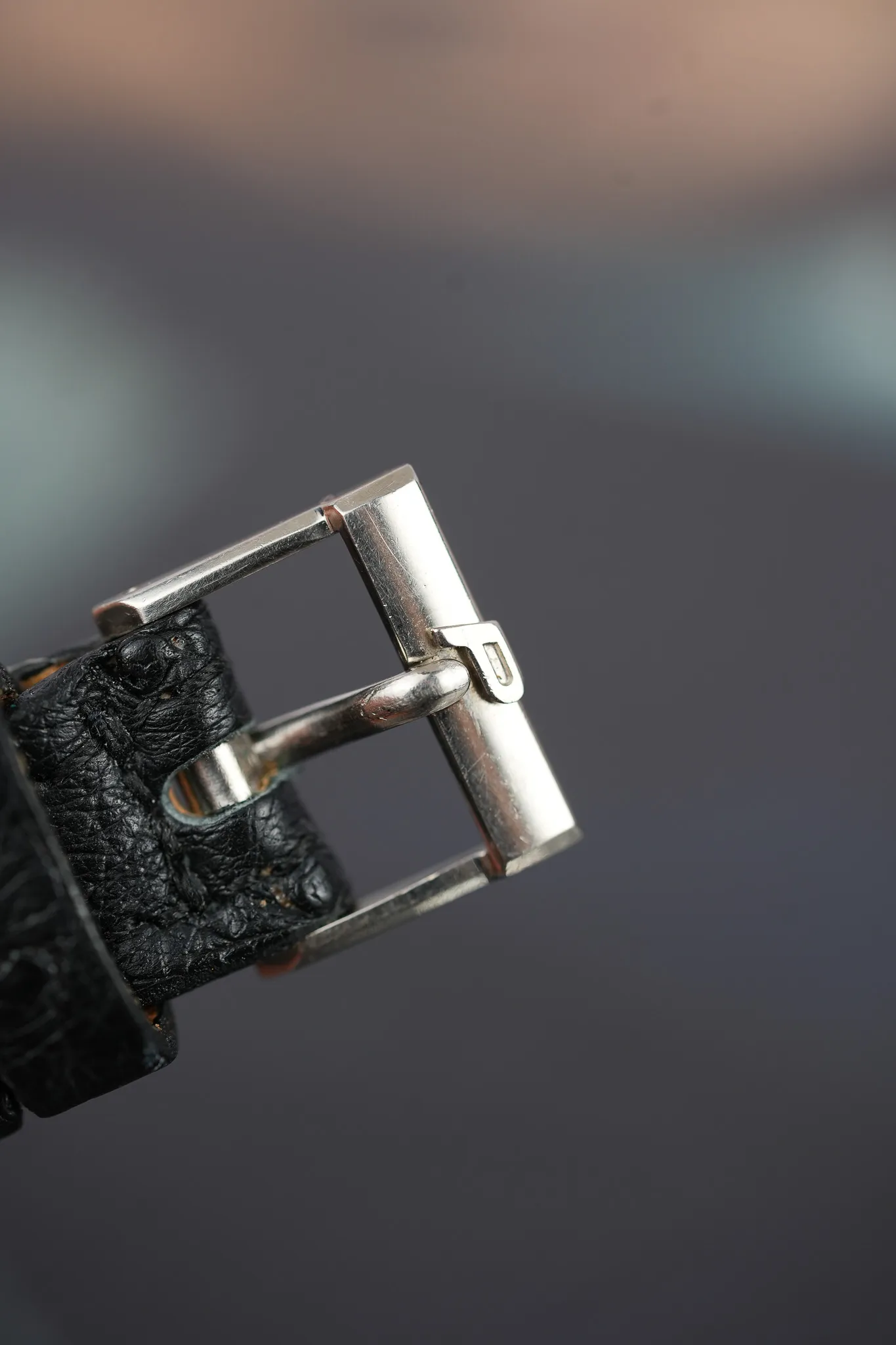
The watch is fitted on a black leather strap with its original 18k white gold Piaget “P” buckle.
The manual-wound Piaget 9P movement is functioning properly at time of listing.
Ordering: Please provide your name, address, email, and phone number. An invoice will be emailed with payment instructions, along with a shipping quote tailored to your location.
Shipping: Fully insured via FedEx, DHL, or UPS. Ships within two business days after payment clears. Worldwide shipping available.
US Tariffs: We take a thoughtful cross-border approach to keep import costs low with no unexpected surprises.
To learn more, click here.
We are here to be your trusted source of romantic vintage watches. We stand behind the products we curate with a 100% authenticity guarantee, a 1 year warranty and a 3-day return policy to ensure you are completely satisfied with your purchase.