

.svg)



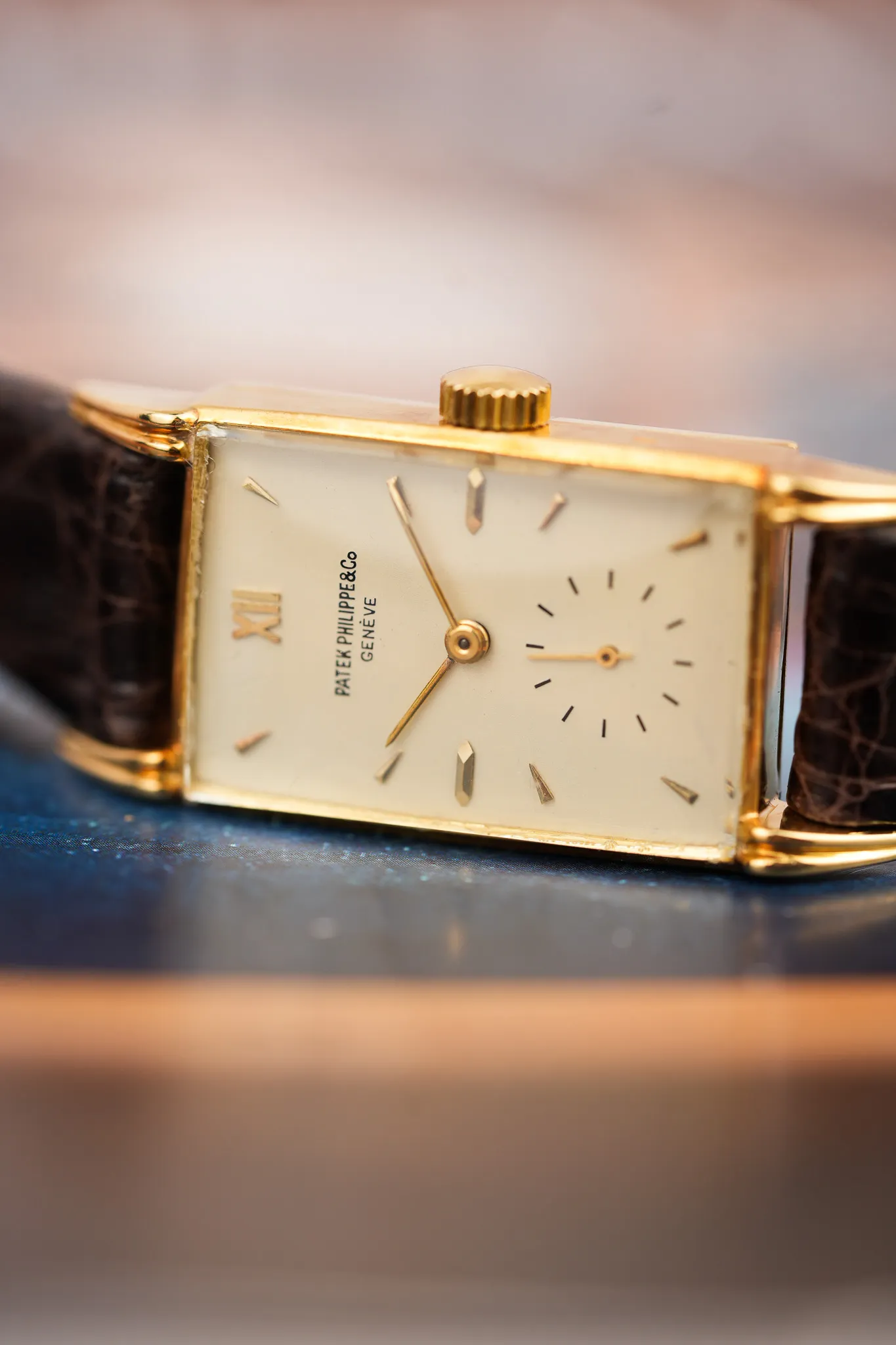
A 1946 Patek That Refuses To Be Small.
In 1946, the world was recalibrating. The war had ended, cities were rebuilding, and people were ready to dress up again. Tailors sharpened their cuts. Lapels widened. Jazz clubs filled. And on the wrists of men who had somewhere to be, watches began to stretch.
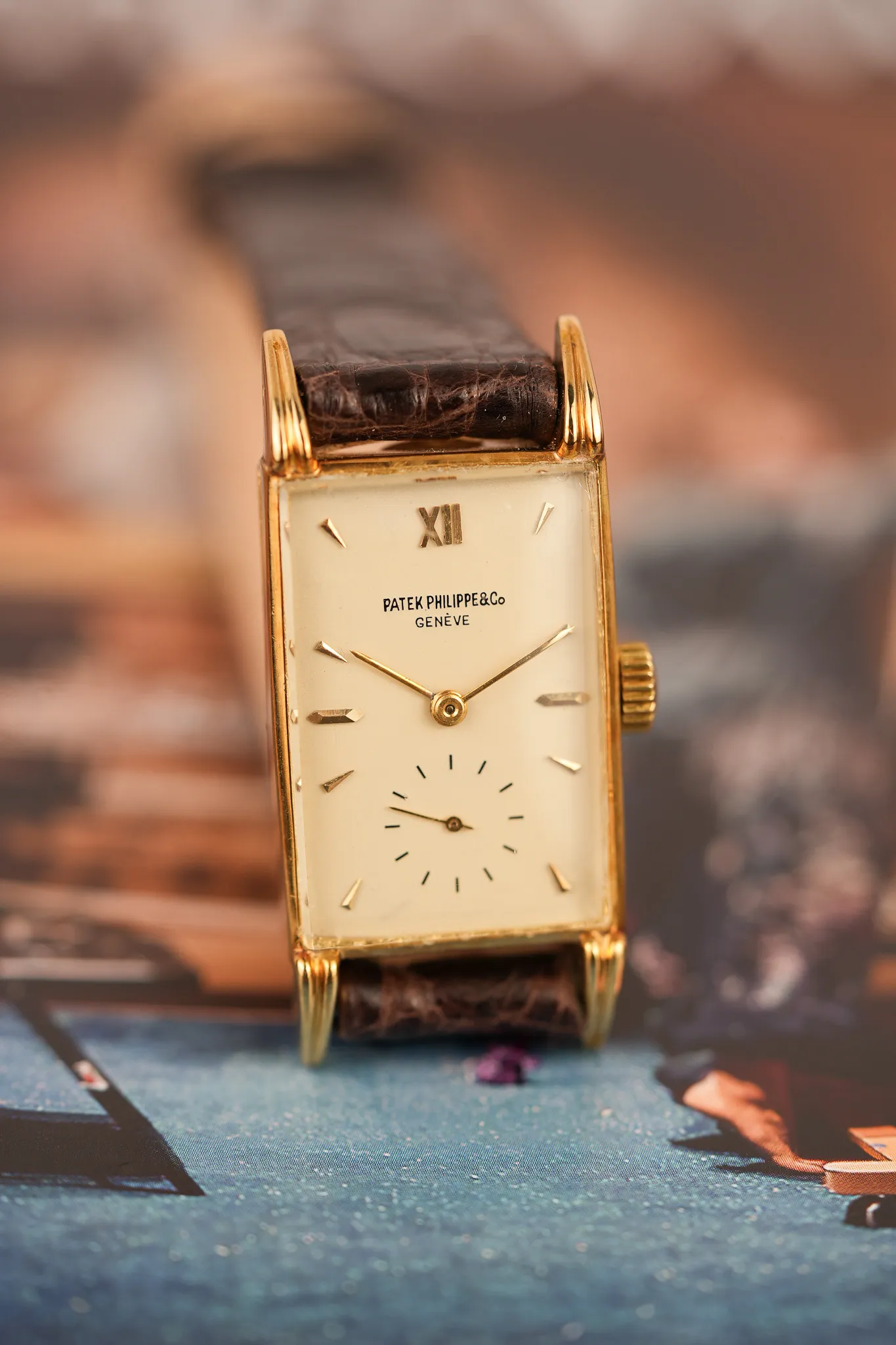
This Patek Philippe reference 2413 feels like it came from that exact moment.
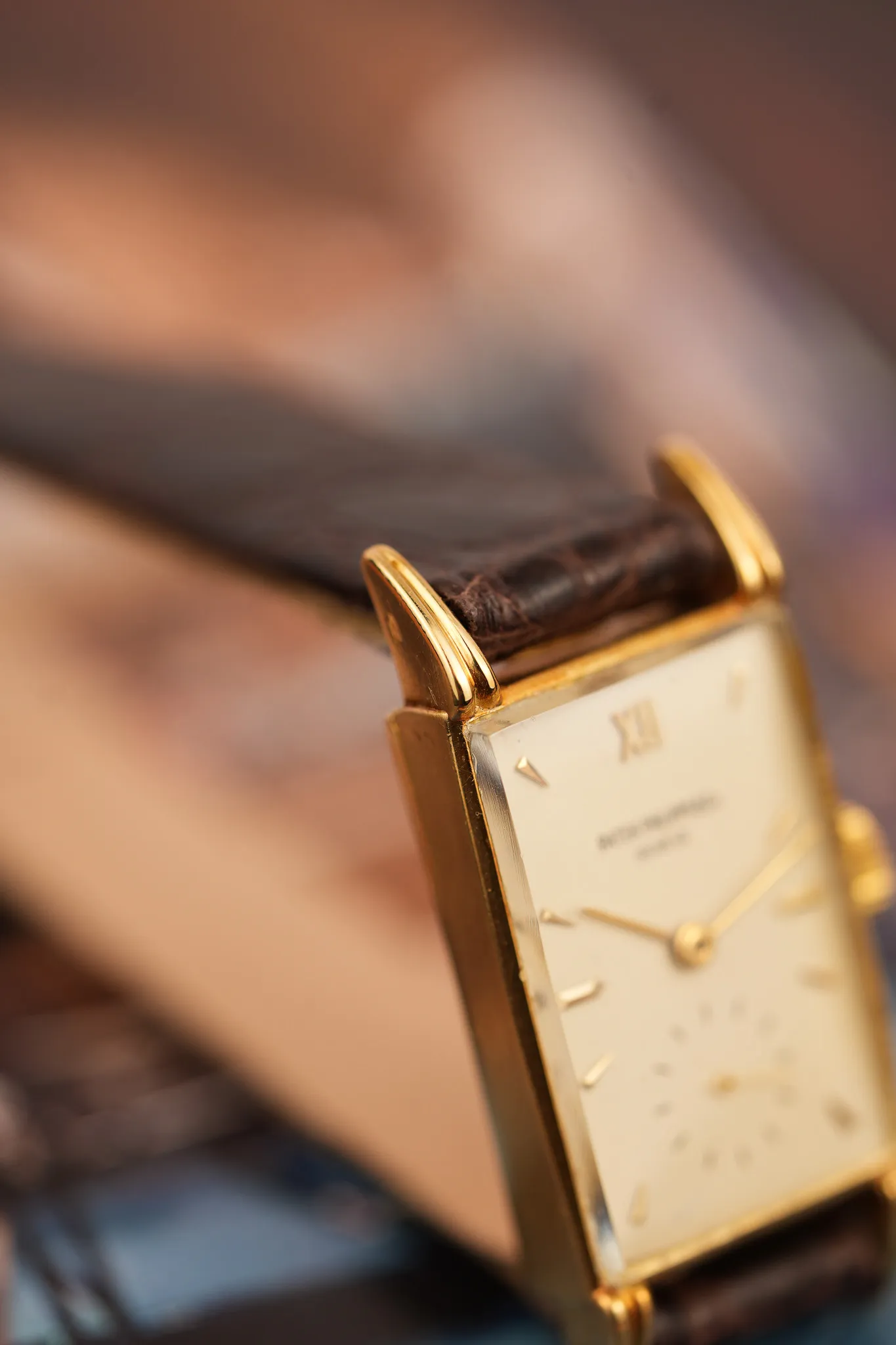
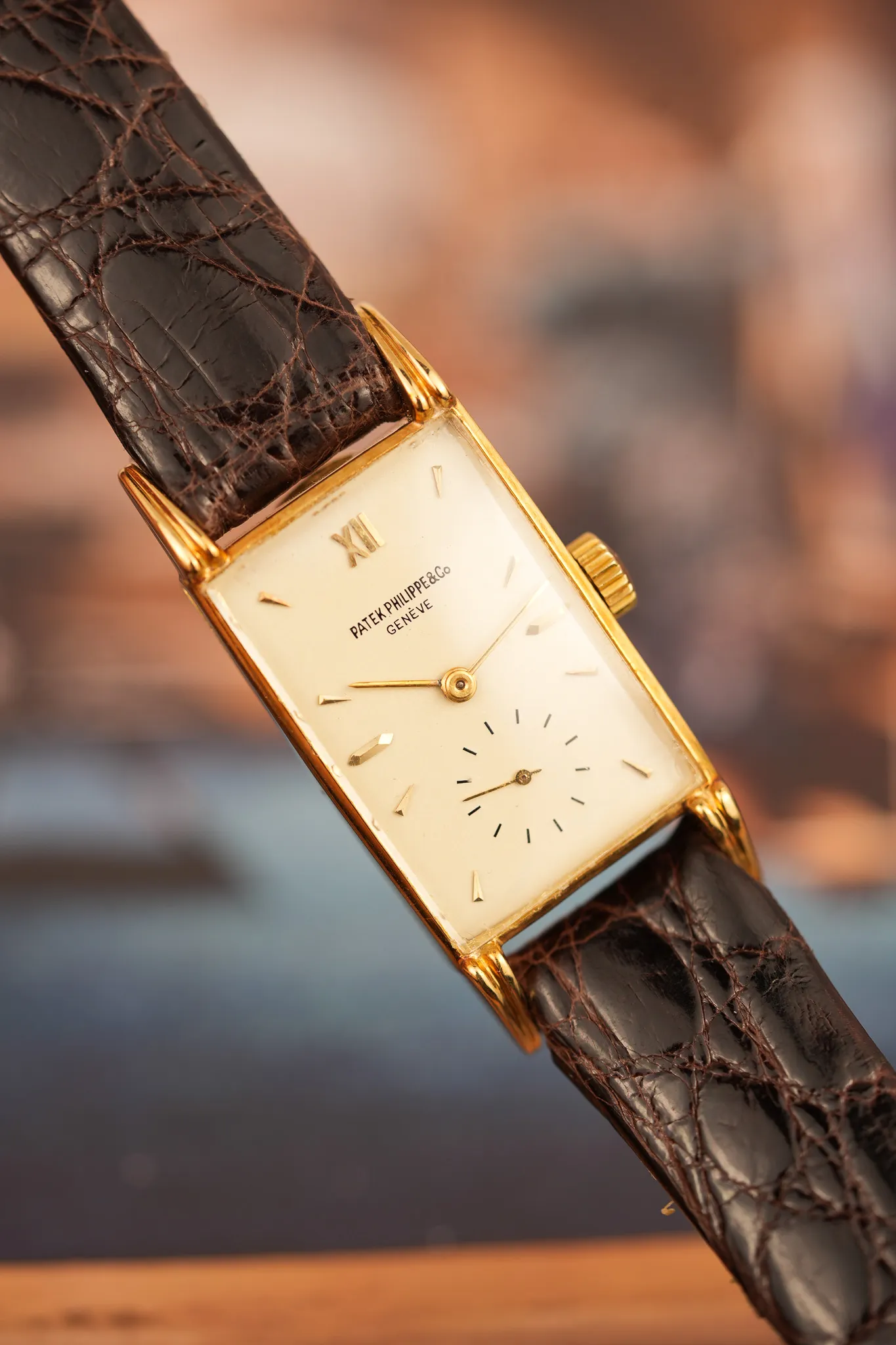
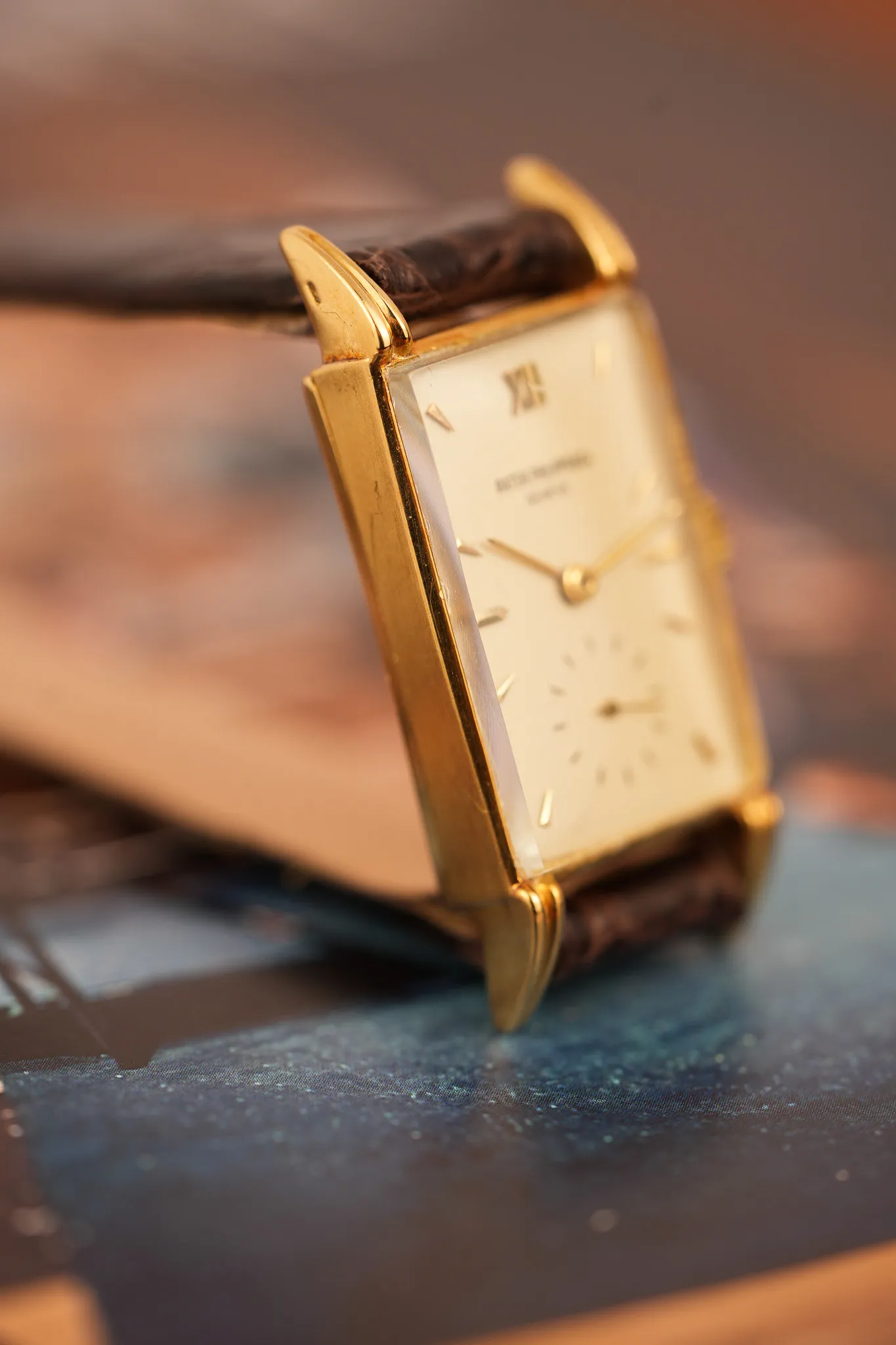
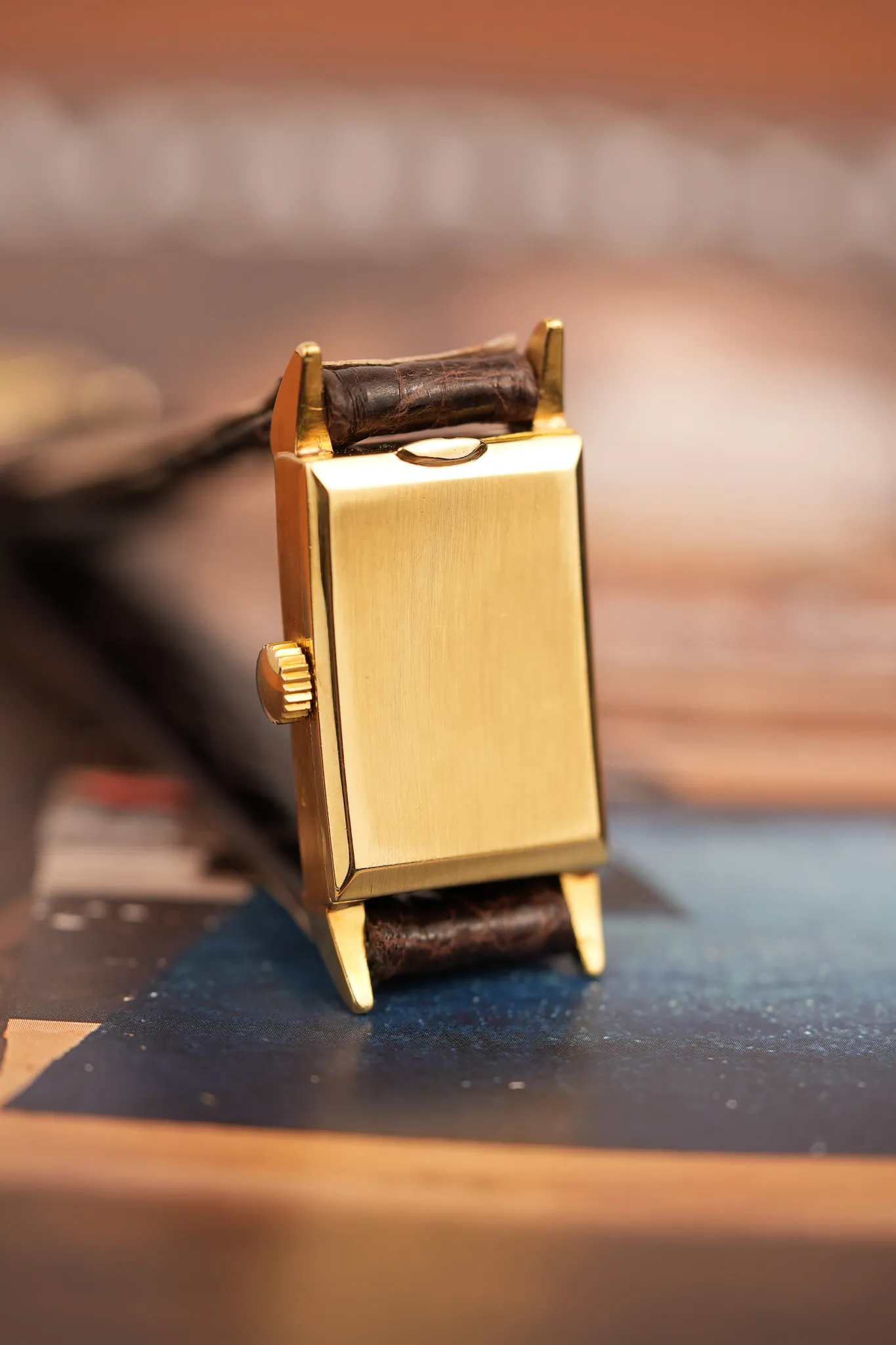
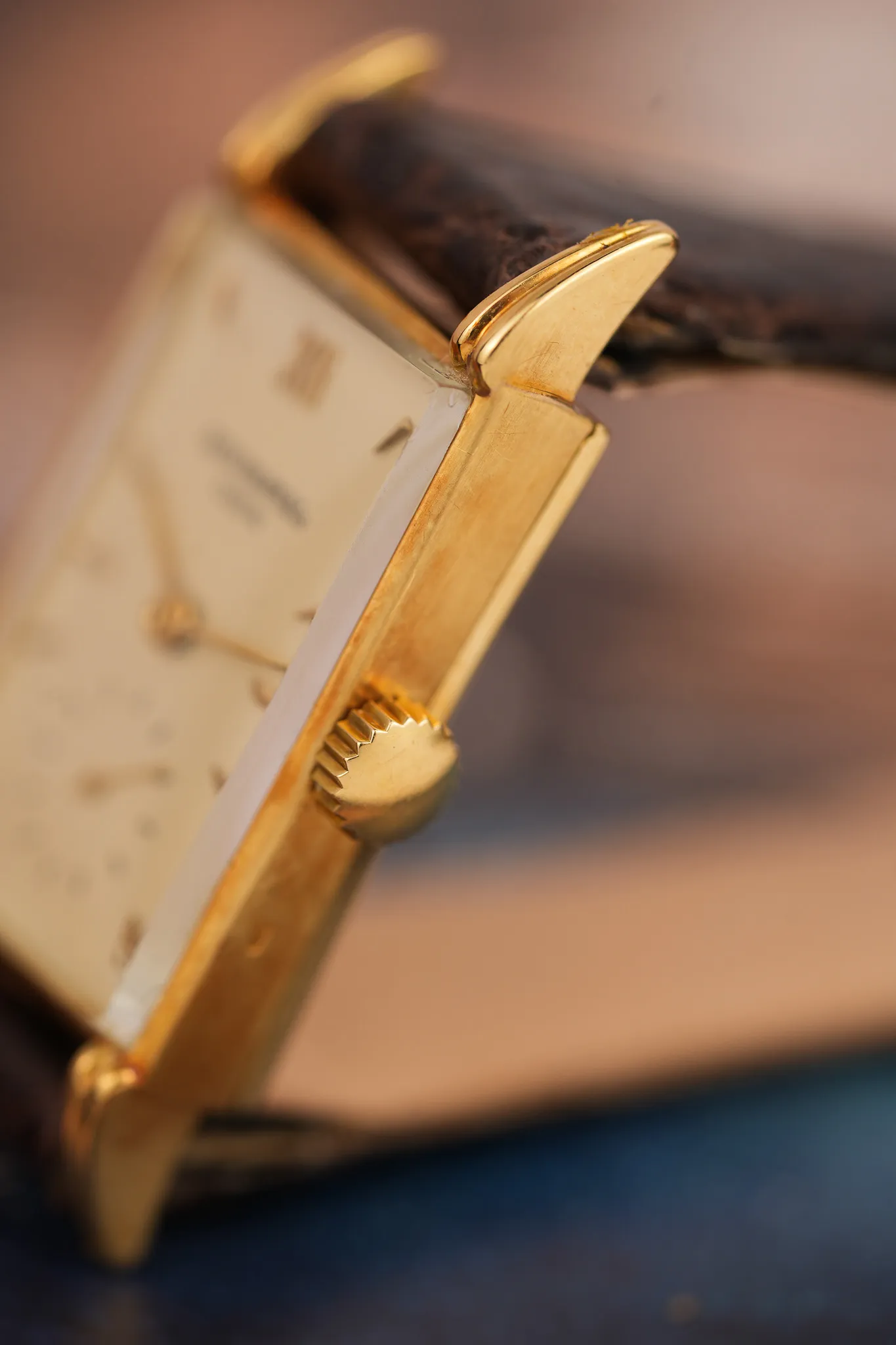
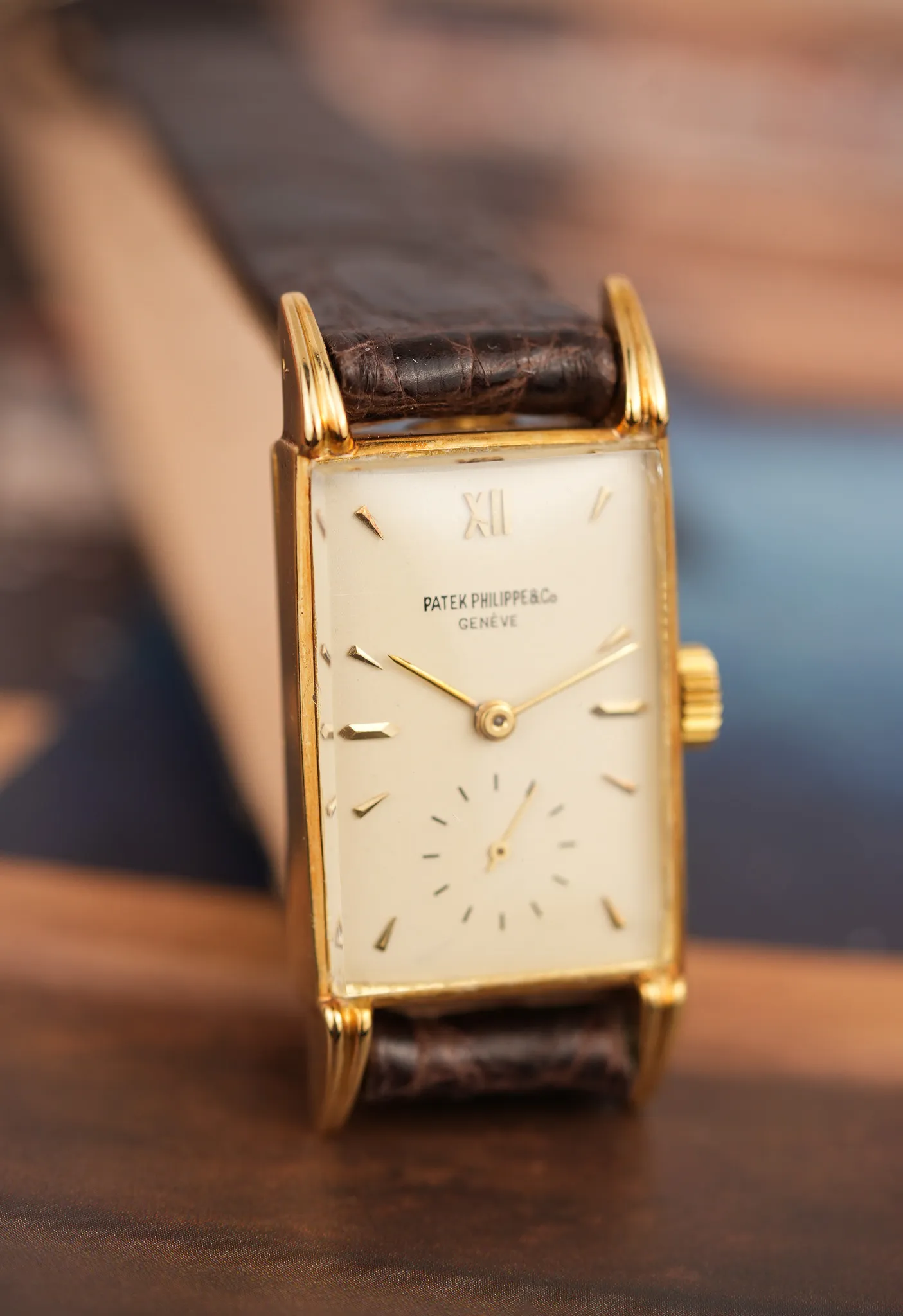
At first glance, it’s slim. Just 20mm wide in 18k yellow gold. But then you look at it from the side, and that 44mm lug-to-lug length takes over. It doesn’t sit on the wrist. It spans it. The elongated tank shape is already elegant, but those lugs… they change the whole conversation.
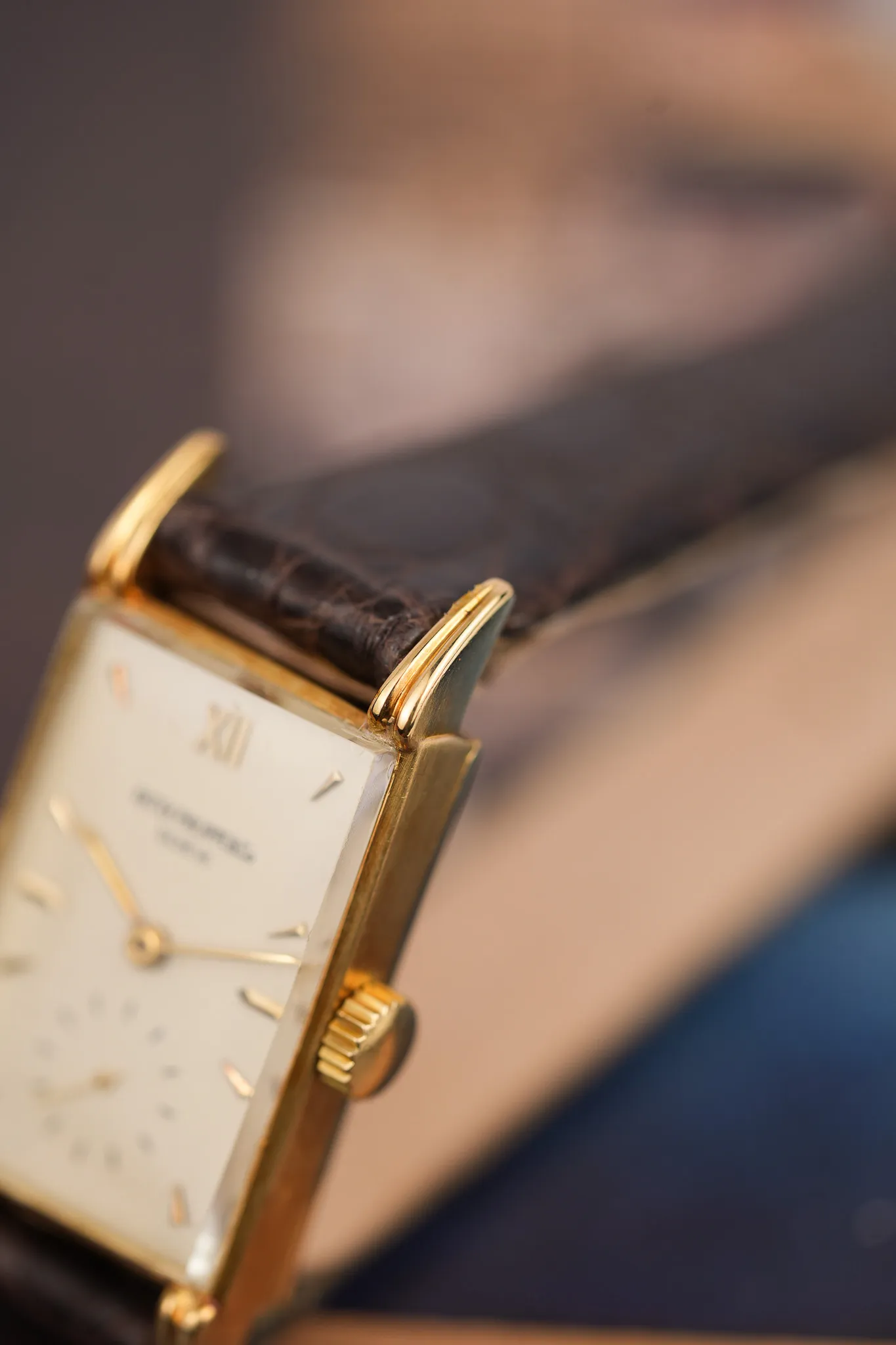
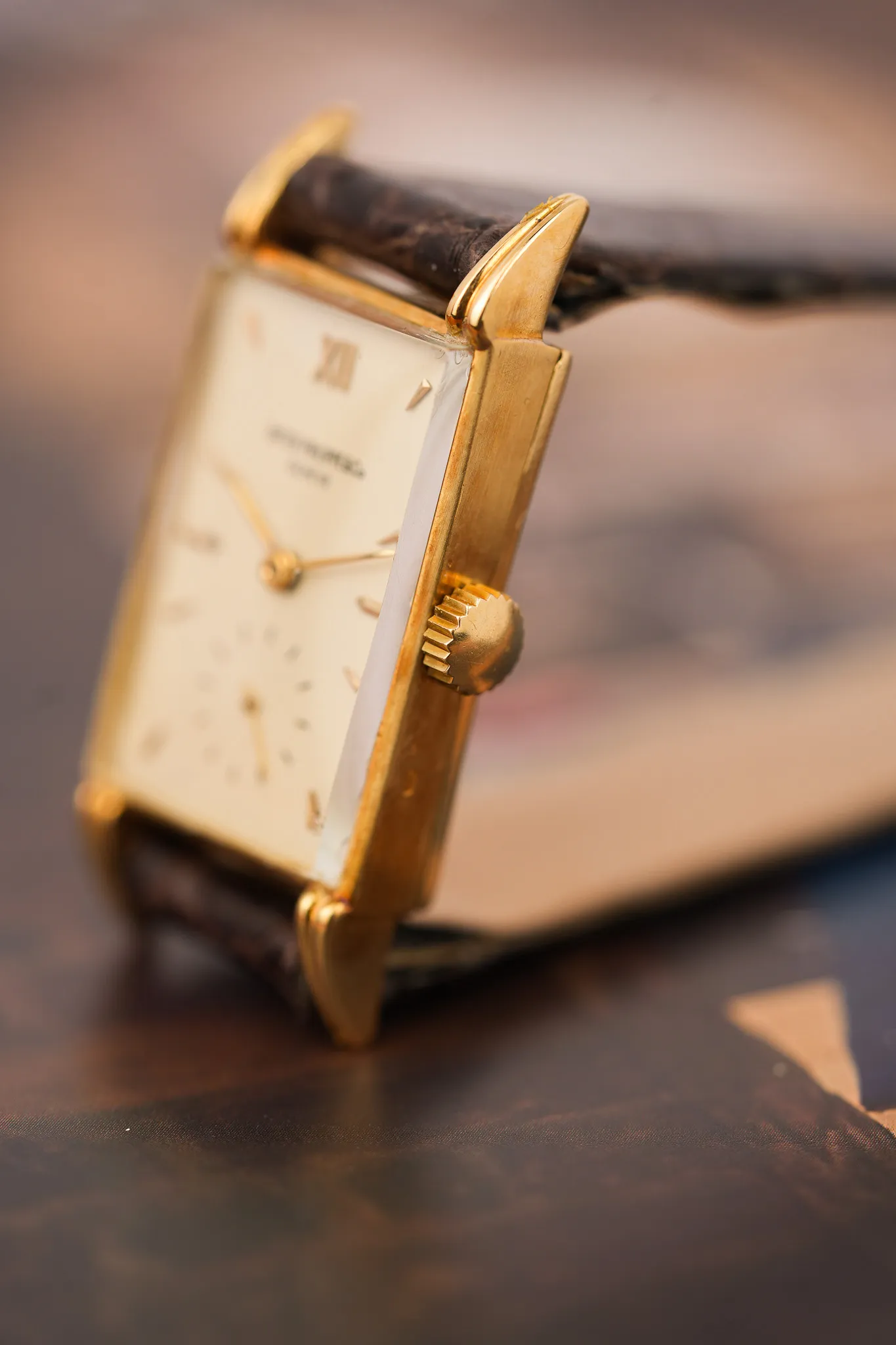
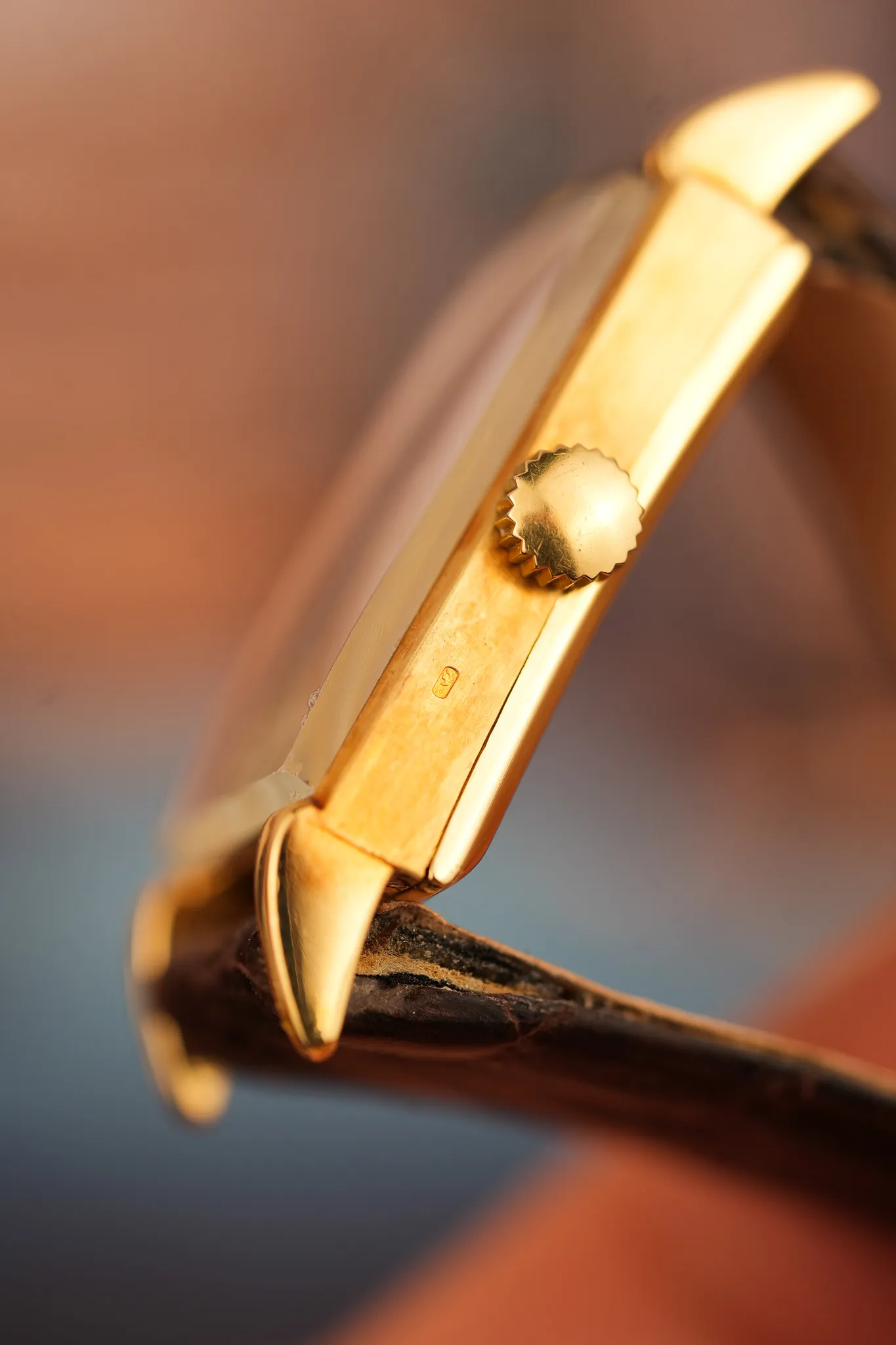
They flare outward with purpose. There’s a visible slit between each lug and the case body, almost like the case is suspended between them. It gives the watch movement even when it’s still. Without the lugs, you’d have an ordinary rectangle. With them, you have something alive.
Then there’s the crystal.
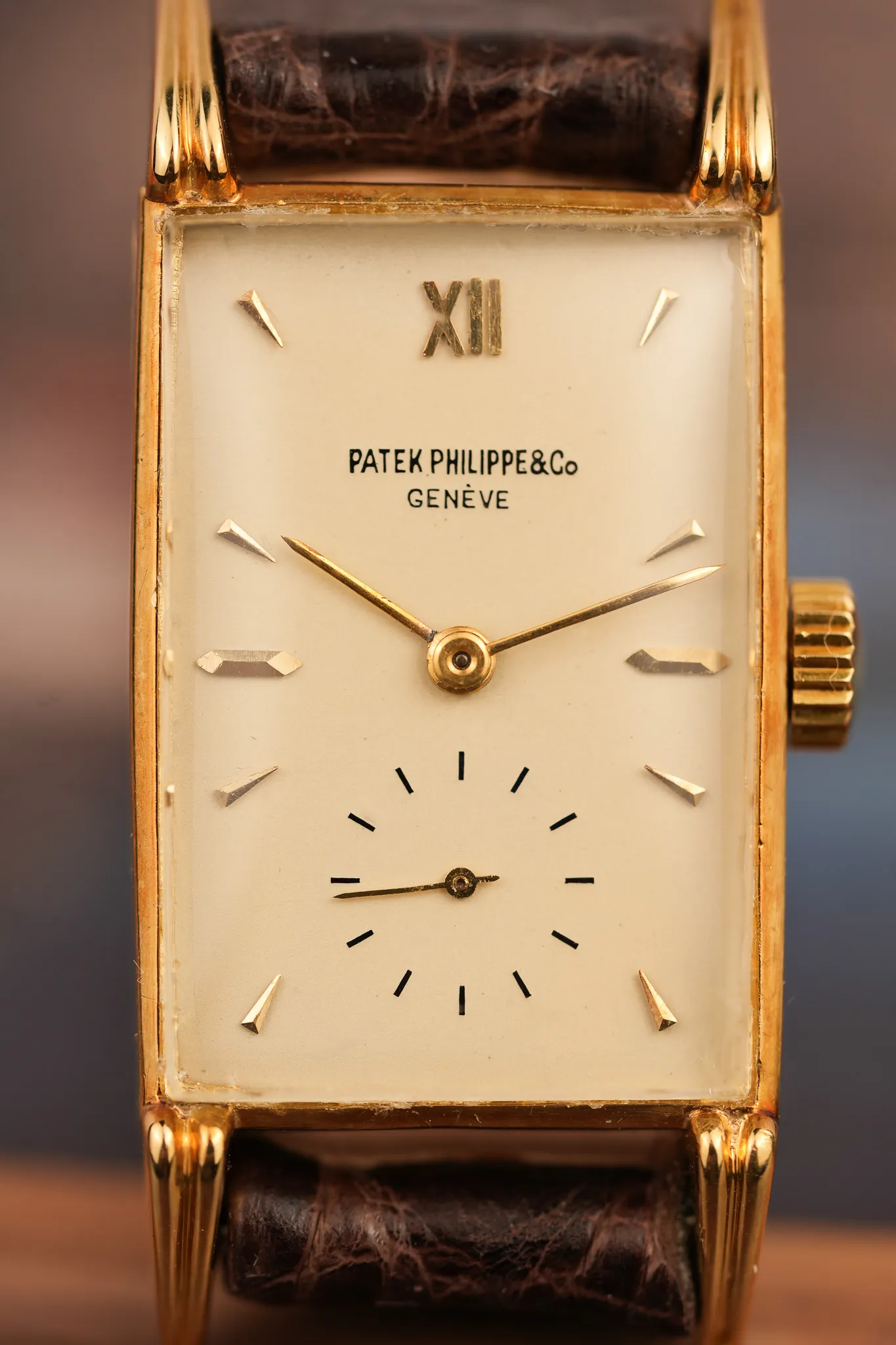
Thick, mineral, and proudly protruding. It rises above the case like a stage. We’re big believers that crystals should participate in the design, not just protect it. In the 1940s, this was part of the charm. That height adds depth to the dial and catches the light in a way modern low-profile crystals simply don’t. From the side, it’s dramatic. From above, it frames the dial like glass over a painting.
And what a dial.
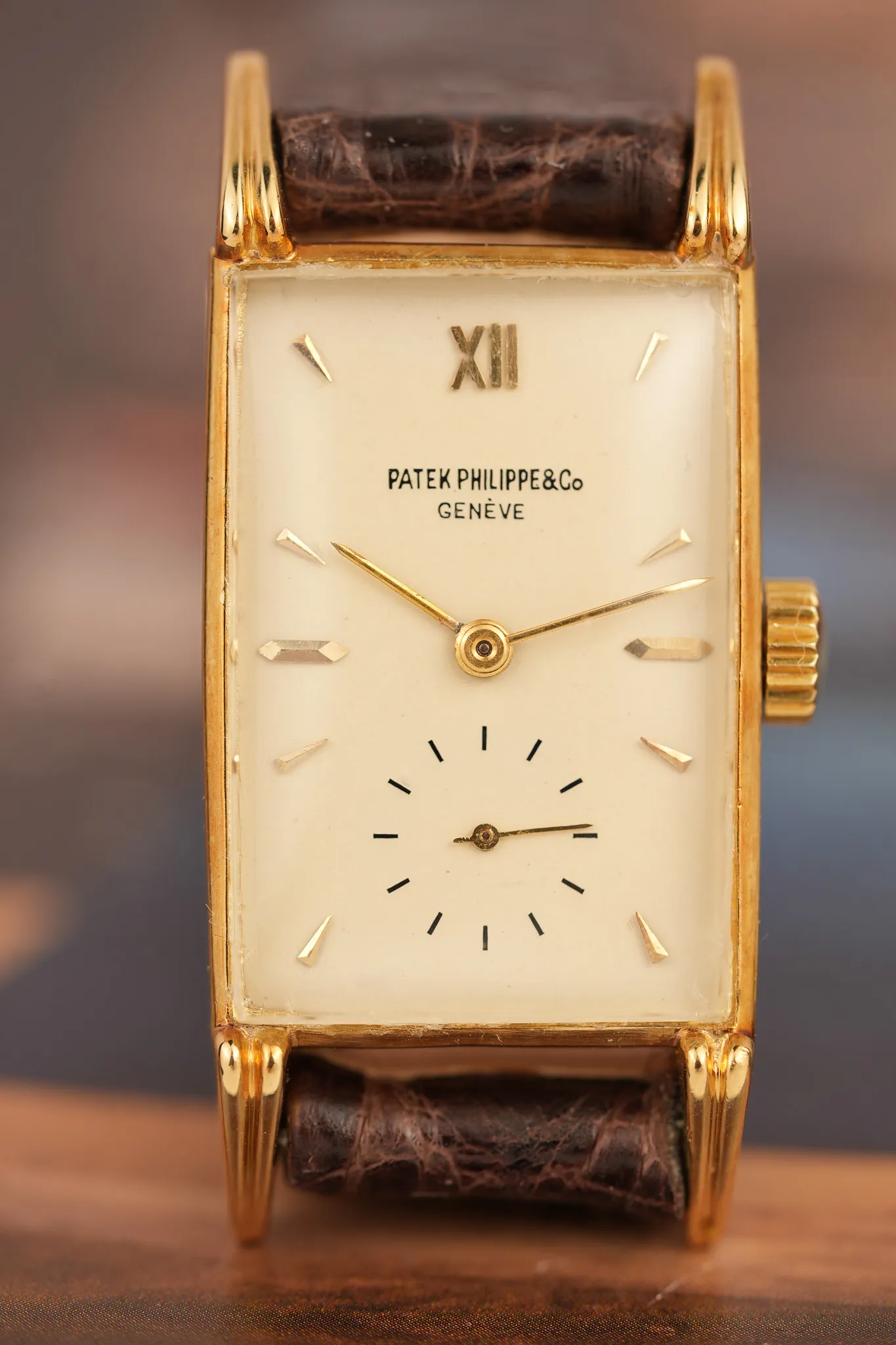
Cream, period-correct “Patek Philippe & Co Genève” signature, and a layout that rewards close attention. A Roman XII anchors the top. Faceted dagger markers carry the hours. At 6 and 9, elongated, multi-faceted markers sit horizontally like polished capsules. Down at six, a small seconds subdial adds visual balance. It’s not busy, but it’s far from plain.
Inside is the manual-wound caliber 9-90. A movement that feels exactly how you’d hope a 1940s Patek should feel. Winding it through that oversized crown is satisfying in a very physical way. The crown is large, deeply knurled, and purposeful. You don’t gingerly turn it. You engage with it. It reminds you that this is mechanical. That energy doesn’t come from a battery. It comes from you.
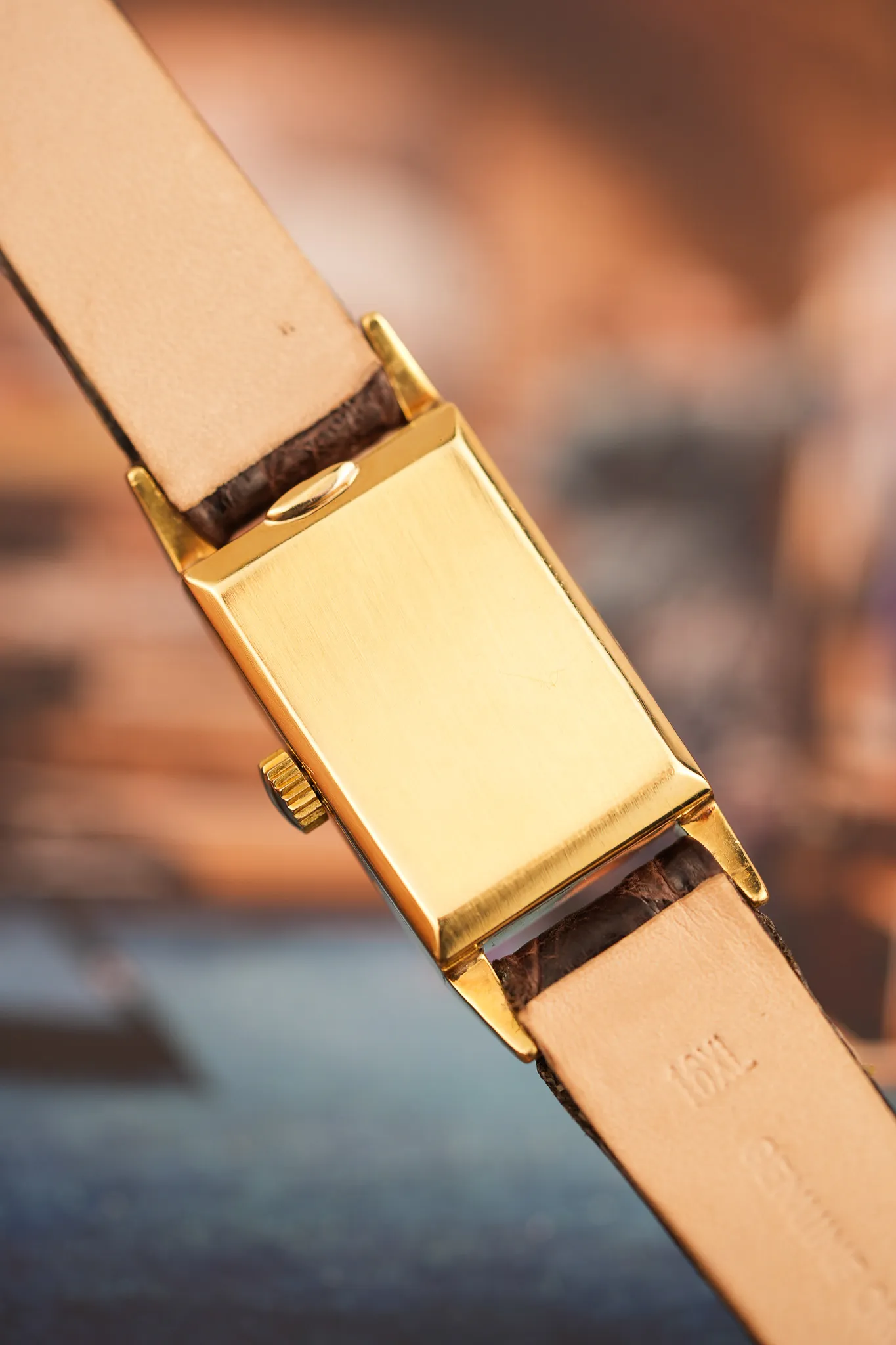
The case itself was made by Weber & Cie SA (Geneva key 29), one of Patek’s respected case makers of the era, established in 1929. It’s a historical detail, but these details are exactly what separate something collectible from something ordinary.
If you’re drawn to post-war Patek, this is a period that matters. The brand was refining its design language while the world was rediscovering optimism. This reference sits comfortably within that narrative. It’s not trying to compete with complicated perpetual calendars or chronographs. It simply shows how much design can be packed into time-only.
And in this condition, it feels preserved rather than restored. The case remains sharp. The dial retains its warmth. The proportions are exactly as intended.
Some watches are about subtlety. This one turns the volume all the way up.

Overall, the watch presents in excellent vintage condition with strong case definition and an attractive original dial.
The 18k yellow gold case by Weber & Cie SA retains sharp lines, well-defined lugs, and clear proportions with light surface wear consistent with age.
The cream dial features the correct “Patek Philippe & Co Genève” signature and shows honest aging with light surface patina consistent with the period.
The snap-back case retains the Geneva key 29 hallmark inside and displays light wear with no major tool marks noted.
The hands are correct to the period and the mineral crystal is thick and protruding with minor edge wear consistent with age.
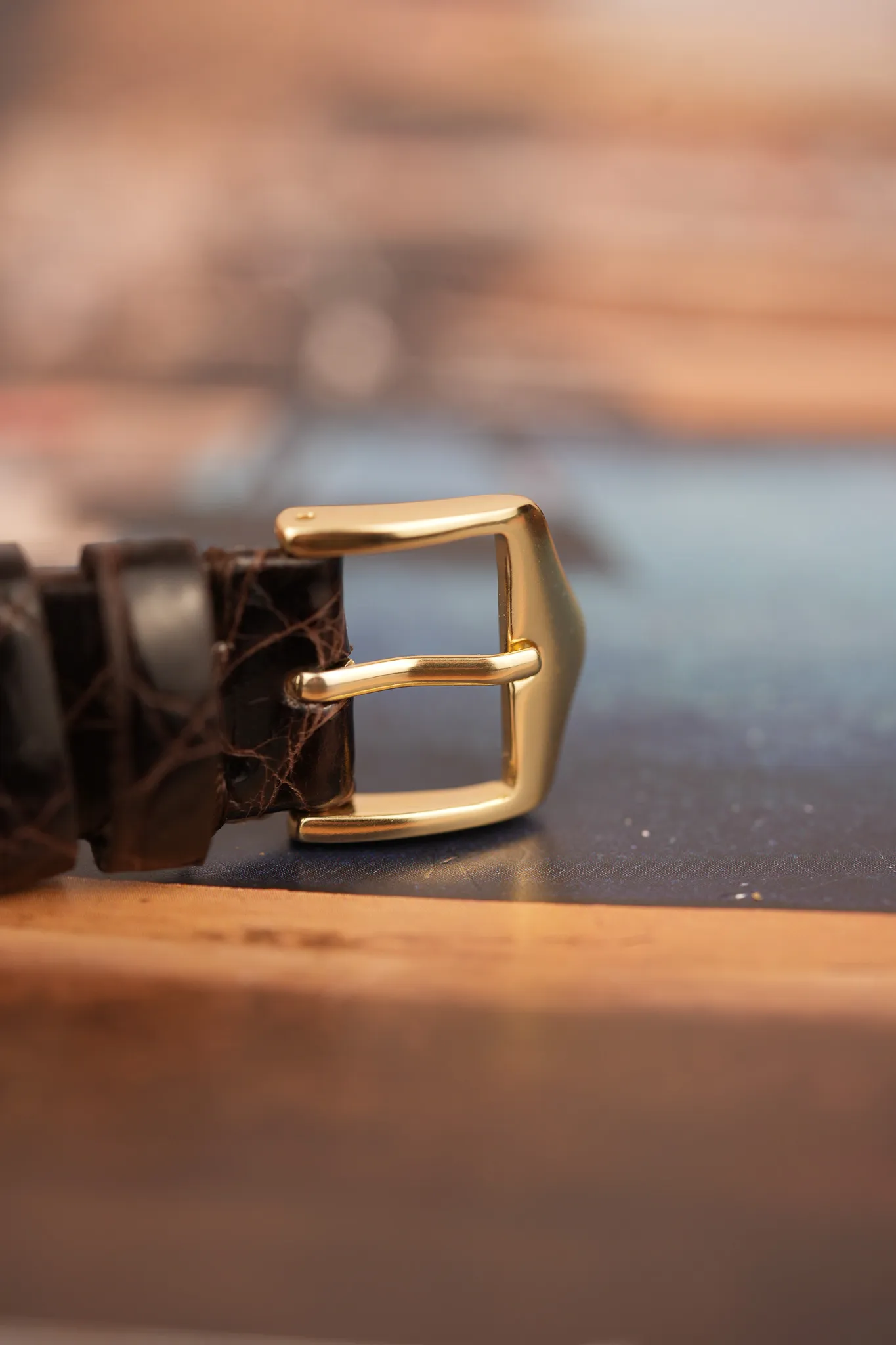
The brown leather strap shows wear and can be replaced upon request.
The manual-wound caliber 9-90 is functioning as intended at the time of listing.
Ordering: Please provide your name, address, email, and phone number. An invoice will be emailed with payment instructions, along with a shipping quote tailored to your location.
Shipping: Fully insured via FedEx, DHL, or UPS. Ships within two business days after payment clears. Worldwide shipping available.
US Tariffs: We take a thoughtful cross-border approach to keep import costs low with no unexpected surprises.
To learn more, click here.
We are here to be your trusted source of romantic vintage watches. We stand behind the products we curate with a 100% authenticity guarantee, a 1 year warranty and a 3-day return policy to ensure you are completely satisfied with your purchase.